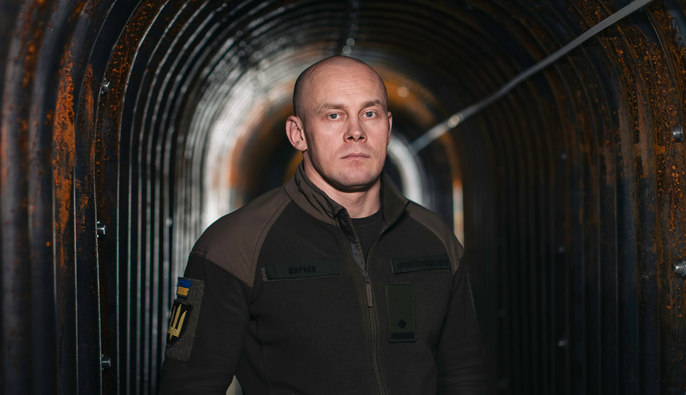
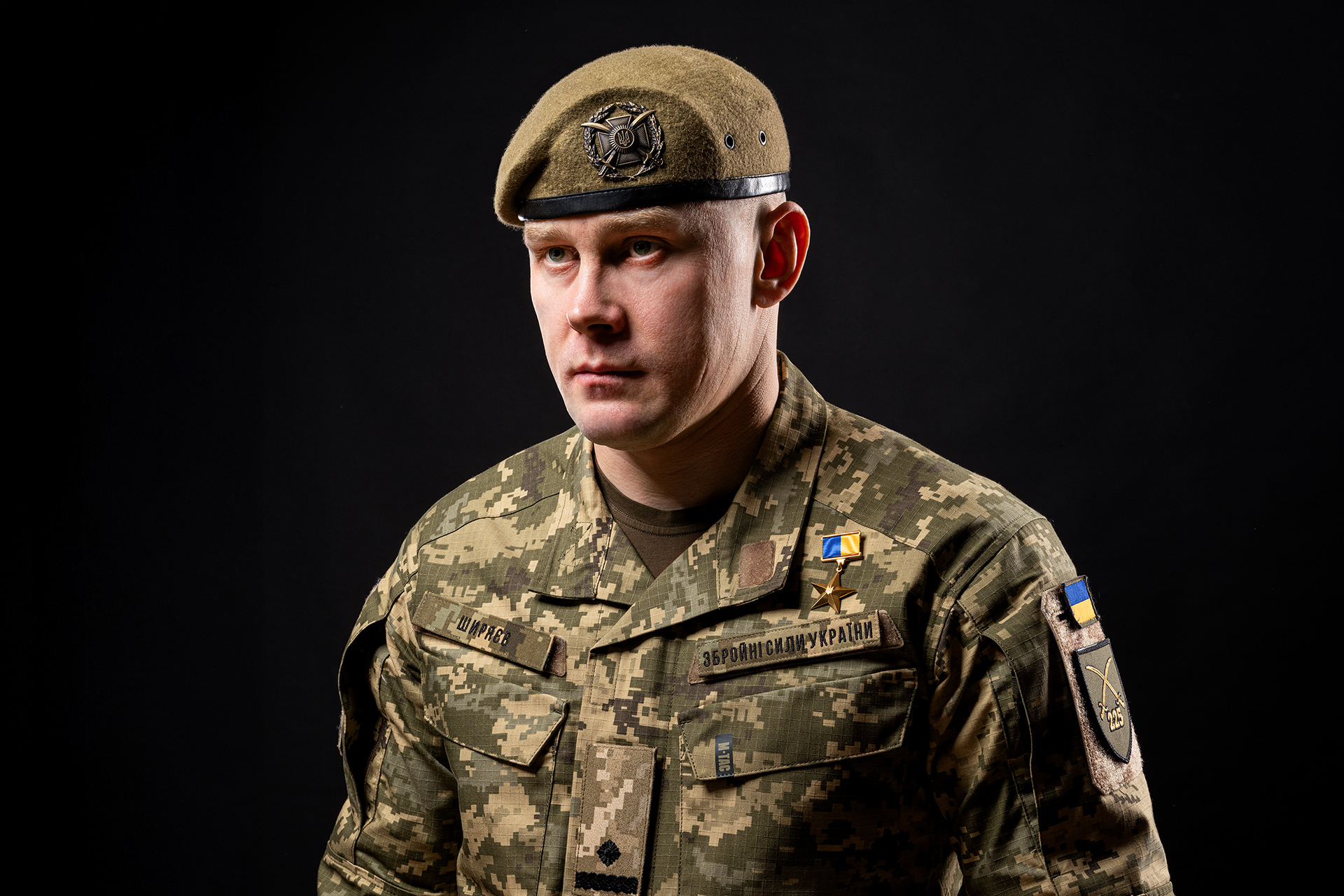
Oleg Shyriaiev is the commander of the 225th Separate Assault Regiment of the Armed Forces of Ukraine, a Hero of Ukraine, and a veteran of the Anti-Terrorist Operation (ATO). Since the onset of Russia’s full-scale invasion, he has risen from the rank of a private soldier to regiment commander.
In an interview with Apostrophe, Mr. Shiryaev discussed his views on demands for Ukraine to withdraw from the Donetsk and Luhansk regions, his assessment of the new Minister of Defense, how his regiment integrates new recruits and handles unauthorized absences (AWOL), and the singular goal that all Ukrainians must share.
Q. I saw a new report published by the Financial Times suggesting that the United States is prepared to continue aiding Ukraine if Ukraine withdraws its troops from the Donetsk and Luhansk regions. The White House immediately denied this report, but we are seeing this discourse in the media.
I understand you are a military man and will follow the orders of the political leadership. Aside from that, what do you think of such demands placed on Ukraine?
A. That is correct. I am a military man; we follow orders. My purely subjective opinion is this: I do not understand how we can abandon people in Kramatorsk, in Slovyansk—people who identify with Ukraine, with our state.
I have spent a considerable amount of time fighting in the Donetsk direction and the Luhansk direction. I feel sorry for this population, and it troubles me that such demands might be made of us. I believe they are impossible to fulfill.
I would not want our military-political leadership to be faced with such a choice.
From a military perspective, it is also wrong, because we have quite serious fortifications there, a large urban agglomeration, and we can continue to fight there for a long time.
For example, France was completely occupied by Nazi Germany during World War II, but with the help of allies, it regained its territory. Poland and quite a few other countries did the same.
Q. That is, the allies did not demand that France give up part of its territory.
A. I know the history of World War II well, and I do not recall such demands. It is wrong. It would be better if our partners helped us win.
Can Ukraine win on its own? Yes, it can, but with the help of the civilized West. Europe, Great Britain, and the United States must continue to help.
I always say that America will never change its attitude toward the Russian Federation. Never. I am confident that America will always help us in one way or another.
I do not believe that our military-political leadership will fail to win this political discourse. Volodymyr Zelensky is an experienced man in politics. Anyone else, frankly, would have burned out by now... Therefore, I think he will be able to find a way out of this situation.
Q. Major, regarding Russia's attack on Ukraine in 2014—this has already lasted almost two terms of the Second World War. Does this mean we must be ready for a third term? In that case, where do we get the resources? Where do we get the strength? Where do we get the people, ultimately? As a regiment commander, this problem is likely well known to you.
A. Yes. Unfortunately, I know this problem well. It is quite acute right now.
I have hope associated with the arrival of the new Minister of Defense. I am studying what he says and what he is trying to implement, the ambitious goals he sets for himself.
We have no other path but to fight, you understand? He who surrenders places himself at the mercy of the victor. This will end in nothing good for us as a nation, as a state.
I think we must fight and implement more drone components in the troops. This is a substantial component of modern warfare, where both we and the enemy have unique experience. Unfortunately, the enemy is trying to catch up to us, and in some matters, overtake us. The drone component is quite serious.
Plus, we must change certain strategic approaches. For example, the assassination of the commander of some Army "X" of the Russian Federation will not significantly affect the situation on the battlefield. The war is pushed by tactical-level commanders. These are battalion commanders and company commanders—those who are on the battlefield.
Q. You, by the way, captured an enemy command post, didn't you?
A. We captured more than one, and at that moment we obtained unique documents—maps with unit locations, precise coordinates of artillery and mining. At that time, we were successful in these operations and destroyed tactical-level commanders during assault actions.
I want to say that if we destroy tactical-level commanders along with their drone components—that is, conduct strikes and destroy everything related to drones—this is precisely what will bring success on the battlefield.
Now the enemy is using the same methods we use. This involves cutting off our logistics, remote mining, and supporting their groups that infiltrate the inter-positional space of our troops.
Q. These penetrations by small assault groups?
A. Penetrations intended to either build up forces or conduct work on logistical routes—meaning setting ambushes, making the delivery of water, food, ammunition, fuel, batteries, and so on impossible.
Q. Diversionary actions, right?
A. Exactly, diversionary actions. But you understand, this is done by ordinary soldiers, and it is all supported by drones. Sometimes, simply on a map—they use the "Alpine" program—they draw routes. Sometimes singly, sometimes in groups, small groups of two or three enemy servicemen conduct the penetration.
What does this yield? First, the effect of panic, because not all of our units can stand firm and unshakeable when the enemy is in the rear. That is, to conduct anti-diversionary work, to carry out a sweep.
What can we rely on when conducting such sweeps? We rely on direction finding, on detecting these groups, and sending our groups there to block and subsequently conduct search-and-strike actions to destroy the enemy.
Q. Mr. Shiryaev, regarding the episode where the Russians showed a captured Ukrainian command post in Zaporizhzhia—in your opinion as a regiment commander, was that a consequence of what you are talking about now: panic?
A. What happened in Huliaipole, in the Zaporizhzhia direction, was caused by other things. I remember that moment quite well, and the units on our side that were stationed there.
It was the 102nd Territorial Defense Brigade, which withdrew from positions due to low morale, unfortunately, because their commanders did not do their job. They are not my subordinates, and it is difficult for me to comment and find the words for what this is called. I could express myself quite clearly on this, but I consider it incorrect. Therefore, I will simply say briefly that they withdrew, exposing a certain sector of the front.
This is regrettable because others remained there, and the enemy got into their rear. These were my soldiers as well. We had to fight in an all-around defense, set up new lines, and so on.
What does such behavior lead to—an unauthorized withdrawal from a position? According to the combat manual, a withdrawal maneuver is permitted only with the permission of a superior commander. They did not have such permission, and I am sure this led to friendly fire and so forth on the battlefield.
This is quite serious because only through coordination can you know what is happening in one unit or another—in this case, an adjacent unit standing by your side. I am sure that the soldiers who withdrew from the position did not realize the consequences, and their commanders failed them by not explaining precisely what the consequences could be.
Where someone cannot stand firm and unshakeable, we appear and work to stabilize the situation.
Q. That is, the regiment is thrown into places where...
A. Not thrown. I don't like the word "thrown."
Q. Directed.
A. Directed. We receive a task. The combat order contains two sentences on what we must accomplish, the coordinates, and so on.
Then I must break down this task for my subordinates, and the subordinates must depart, conduct reconnaissance, and prepare. Sometimes this is quite difficult to do because the situation requires immediate intervention and the resolution of difficult issues.
Q. You are the commander of an assault regiment. The very name implies that these are people who go on the assault, who take risks...
A. These people risk what is most valuable—their lives.
Q. Their lives. What are your losses? I don’t mean specific numbers, but relatively speaking, compared to other units.
A. There are statistics, of course. I constantly compare them with the units we come to assist. If there is panic and units withdraw from a direction, they suffer higher casualties than we do while conducting assault operations.
Q. Is this the result of training?
A. This is the result of discipline and the fact that we control the process and enter the direction [of attack], controlling every assault group. We have, first, communications; second, delivery of provisions, ammunition, medicine, and so on to positions by one method or another. We ensure this in various ways.
The main thing is understanding the task, assessment, and decision-making. Some flee and suffer losses because, excuse me, they are blockheads who abandoned their soldiers to their fate. And we go in to save the situation.
Everyone understands that saving a situation is always quite difficult. We wouldn't suffer the losses we have if certain others worked with their personnel properly. That is the situation.
Q. There is a huge psychological moment here. People come to you—tell me frankly, are they in shock that they ended up in an assault unit? I understand that some go consciously, but not everyone does. They could have ended up in artillery, aviation, or some other unit. Here they are told: "You are stormtroopers."
As a regiment commander, when you come out to these people and look them in the eye, what do you tell them? Do you calm them down, or do you explain something? How do you address them? As a commander: "Sons, you are here, we are fighting," or "Warriors." It seems to me people need to be calmed down first?
A. You are right. We must indeed meet the personnel, and they must adapt and realize where they have landed. I always orient them that it will not be easy, but they should not be frightened by the fact that they are currently serving in an assault unit.
In reality, all units are now performing roughly the same tasks. Some units are more combat-capable due to the training of personnel, and because over a certain period we grew in an evolutionary way, and our team of like-minded people is constantly increasing.
We differ from other units in that quite a few people became officers from the rank-and-file and sergeant corps.
Q. You went from a private soldier to a regiment commander, correct?
A. Yes, I went from private to officer, received my primary officer rank, then obtained military education and continue to study. The same goes for our entire command staff, because we do not have many career officers.
There are some, of course; we receive replenishments including graduates from military universities. We involve them in service; they command platoons and companies, and become battalion commanders. We move as a team and grow as a team.
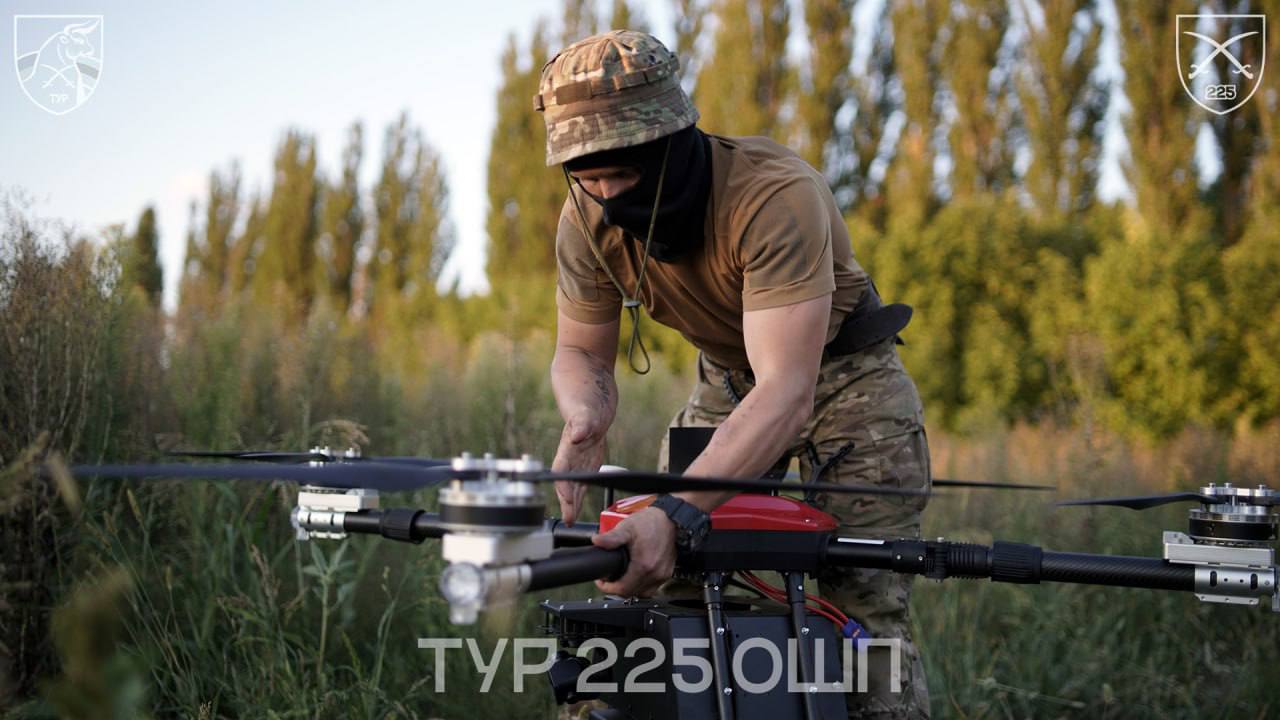
First and foremost, we select people based on their abilities. The assault battalion staff includes a company of strike unmanned aerial vehicle complexes. Even if the entire staff is full, but we realize a person has ability, we create supernumerary drone crews—Mavic, FPV, heavy bombers, ground robotic complexes, and so on. This is not a problem.
The main thing is to find a person's talent. A person might be a good driver, and if certain conditions are created, they can perform tasks on armored vehicles. Provided the vehicle is welded and armored quite well and densely, which is what we do. I adopted this experience from the 1st Assault Regiment. They are serious guys; their commander recently received the title of Hero of Ukraine. They shared their experience on how they armor-plate their equipment.
Q. So you do this in your own workshop? The equipment comes to you?
A. Yes, there is a repair and restoration battalion that deals with precisely these matters. On equipment that arrives from the factory, we add electronic warfare (EW) systems, and that plating which will work against remote mining as well...
Q. But agree, you are receiving a semi-finished product. I might be mistaken, but both EW and extra armor should have already arrived with the troops.
A. Place, time, circumstances. The person manufacturing and selling the equipment—I don't know—maybe they aren't interested, maybe they don't have experience involving this equipment in combat. We finish the equipment ourselves, yes.
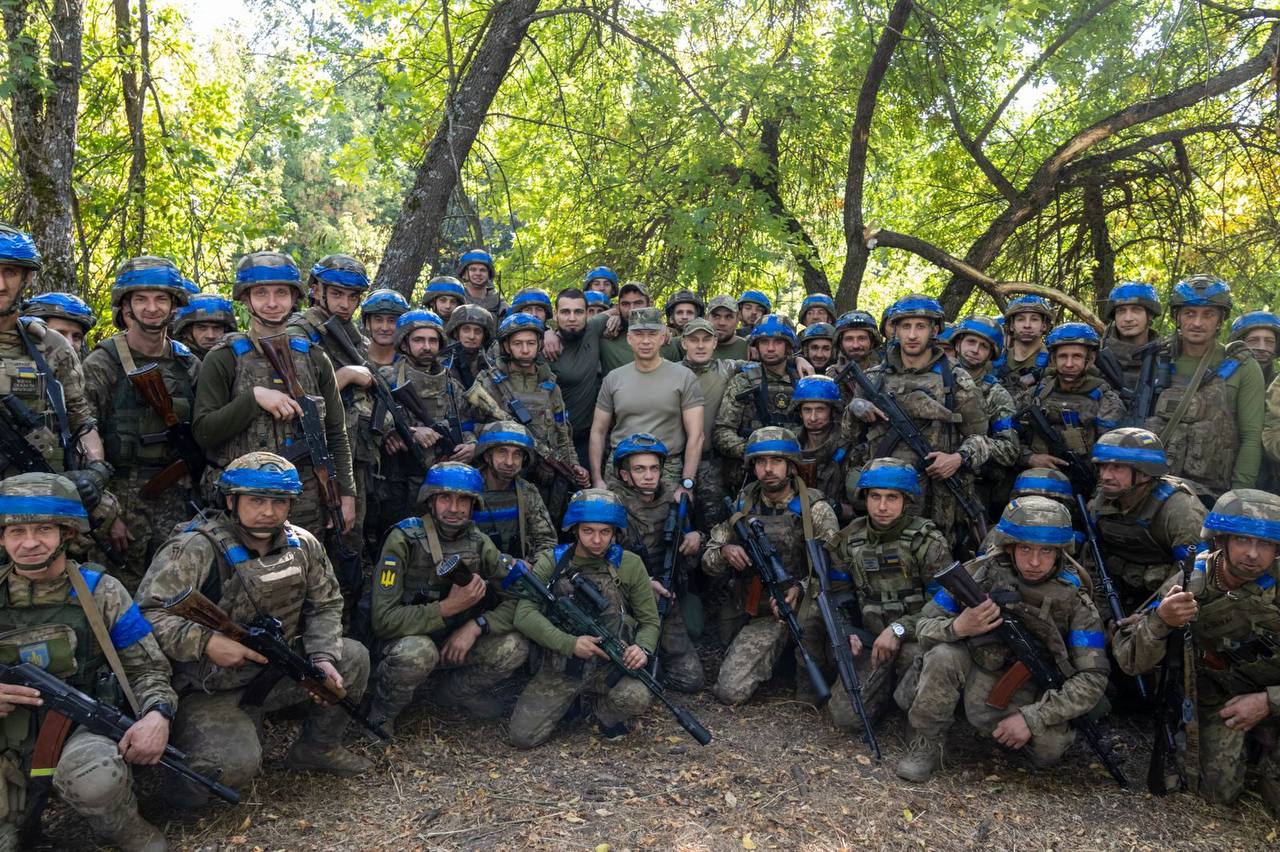
Q. We journalists recently had a meeting with the new Minister of Defense, Mykhailo Fedorov. I asked him about supplying the troops because there are many complaints from the front, and people—as you just confirmed—are finishing all this with their own hands. In my opinion, it shouldn't be this way.
The Minister said that, of course, it is necessary to sort out the procurement system, how it happens, and why there are people interested in supplying semi-finished products to the front.
As I understood it, he is saying that the "kill zone" should be maximally saturated with robotic, automated, and unmanned systems. It's not easy to do, obviously, and it will be gradual, but the goal is for human presence to constantly decrease in this kill zone. Roughly speaking, so that robots do more of your assault work.
What do you think, how realistic is this? What do we need to do to defeat the enemy in this component, understanding that the Russians are also developing and have support from China and North Korea?
A. Mykhailo Fedorov is indeed correct. These are quite serious things, and naturally, we must move in that direction. You correctly noted that it will be gradual; I completely agree with that.
We are currently striking at the strategic level—for example, the enemy's military-industrial complex, oil depots, logistics. This is correct. This must remain. That is first.
Second, with those same means that carry serious weight—for example, warheads from 50 kg—we must find the funds for this and strike the front edge, the enemy's pilots, and the enemy's command posts.
You cannot even imagine the number of KABs [guided aerial bombs] and airstrikes the enemy launches against the pilots of our unit in a single day. It can be up to 30 strikes in a sector.
I am sure that every unit commander who is fighting and has combat experience will confirm that if the enemy detects our pilots, they try to simply wipe them off the face of the earth.
Q. And the enemy specifically hunts for the crews.
A. Of course, because if he knocks out our drone operators, scouts, and strike drones, it is easier for him to advance. Naturally, if we do the same, it will be much easier for us to advance.
In all operations where we caught the enemy by surprise—that is, where the effect of surprise was quite strongly expressed—the enemy, even if they expected us, did not manage to make the correct maneuvers, meaning reinforcing the directions where we were working.
We succeeded in entering, advancing, destroying the enemy, digging in, and occupying one settlement or another. Then we always run into the same story: the enemy starts pulling up their most effective unmanned systems units.
Q. And they understand they are working against you?
A. They understand, and they bring in the best, for example, "Rubicon" and so on.
The enemy also has quite serious UAV units. Then begins what I call "Operation Nerve-Wracking." They start striking logistics; it becomes increasingly difficult to move.
Naturally, we try to find ways out of this situation: either weather conditions, or demining groups that walk the routes and shoot the "waiters" [ambushers/mines] the enemy leaves on the routes. For every action, there is a counteraction, but all this takes time.
Q. I know that professional military men, yourself included, never underestimate the enemy, right? You study Russia in your own way. We have entire institutes here studying the hostile country. You study it through the portrait of those fighting against you, against your unit.
Moreover, you have crossed the state border of Ukraine several times. There was such a story, yes?
A. There was, yes.
Q. What is happening inside Russia based on your perception of the enemy, regarding the population that Ukrainian troops encountered in the Kursk region, for example? To what extent is Russia prepared to continue waging such an exhausting war?
A. I think serious socio-political upheavals await Russia in time. This is natural because history moves in a spiral, and they will have a new turn of this spiral.
This will manifest in the fact that among the small nations of Russia, which have a share in the federal formation, consciousness will awaken. They will honor their language, their culture, religion, and so on. This is actually already happening.
Q. But this is a very long process.
A. It is a long process, but in the modern world, everything can explode quickly. Bang, and the match is lit.
I think this is one of the reasons why Putin does not want to stop the war, because he understands that a war awaits him inside [Russia]. Putin will end badly.
Q. Have you heard it said that the Russians, in the process of this war, have already erased, so to speak, the first main composition of their army? Or have they preserved the backbone?
A. They erased it 100%. They erased all the combat contract soldiers.
Everything that survived and occupied tactical-level command links, or operational in some units—these are people with unique combat experience who know how to fight. That is a fact.
How do they work with personnel? We took enemy servicemen prisoner who said their basic training course lasted two weeks. Some said the training course lasted two months. That is, it varies. Different units train differently.
There are probably different requirements, task settings, and so on. One should not underestimate them; their commanders have combat experience, and they know how to command troops. Rams led by a lion will always defeat lions led by a ram.
Q. What was the most combat-capable enemy unit you fought against?
A. There are several units. Of course, "Wagner," when it existed, during Prigozhin's time. Later they crawled away into the regular troops. We met quite a few former Wagnerites throughout the army.
They were at least in the 810th Naval Infantry, and they were in motorized rifle units and airborne units. "Wagner" means discipline and quite good training. They have a certain team spirit; they stick together in their groups.
Q. Interesting, did the enemy ever try to contact you, specifically as a regiment commander?
A. They constantly attack me in the media.
Q. So they know you?
A. They know me; they constantly invent stories about me, fuel them. Sometimes our own yellow press picks some of it up. Yes, of course, they know me well. I am sure.
Q. You react so calmly to everything, even speaking where you might want to say something strong: "That would be incorrect." Besides being a military man, you are an athlete. Do you have some psychological preparation system? Because we are talking about very difficult matters—commanding an assault regiment and, accordingly, charging people up and somehow calming them down. Does one need a personal system to keep oneself constantly in form?
A. It is, you know, like a lifestyle. I don't consider it a system. These are probably the dogmas I adhere to and implement on those around me.
Regarding psychological preparation, naturally, we give certain elements to our soldiers. We have a group of psychologists working.
You understand, control is the main function of management. As a person commanding a unit, I must control, because I am responsible for both combat training and the execution of tasks. Naturally, tasks are of varying complexity.
I consider it incorrect when officers discuss their tasks in public or comment on them. I will not do this, because we all took an oath, including to obey orders. They do not arise out of thin air.
Of course, we suffer losses, just like any unit, not just assault ones. Those who try to say that we are "meat" units, or some kind of "meat" commanders and so on... Probably, it is simply profitable for the people saying this to say so, or it is simply a stereotype. This is beneficial primarily to our enemy because we are a country at war.
I treat criticism quite calmly. I always try to highlight the main thing in order to make the right decision and reach the necessary goal. Then I gradually break the task into several stages and execute it.
The same applies to training; there is also a moral component. Naturally, new arrivals must see the commander. We are fighting in parallel, but time must be set aside to communicate with me as the regiment commander. I hold meetings with servicemen.
Then, of course, the unit commanders work—that is, battalions, separate companies into which specific servicemen fall depending on their talent. Then come the stages of training: the basic course and then specialized training.
Q. You conduct all this within the unit after the basic military training?
A. We conduct the basic military training ourselves too.
Q. You have had to set combat tasks with the understanding that the people are unlikely to return. I know commanders who suffer after this. Is an operation structured so that a chance to remain alive remains?
A. There is always a chance to remain alive. Always.
Q. But it can be minimal?
A. The task of battalions is to work at the tactical level. The means I have as a regiment commander—reconnaissance and strike, that is, a battalion and an artillery division, plus intelligence—I must employ to work at operational depth.
I need to develop and prepare units so that the battalion itself executes tasks at the tactical level—specifically, being able to look ahead of itself, escort its groups, support task execution, support battalion-level artillery, support armor, clear infiltrated enemies, and so on. This is quite difficult, but I have such battalion commanders.
I have battalion commanders who are Heroes of Ukraine, who genuinely perform tasks worthily with minimal losses. Of course, one cannot measure everyone by the same standards.
Q. I understand. Do you form these standards yourself, or are they NATO standards?
A. I was leading to the fact that I must use my means to work at operational depth (that is, prevent the enemy from reaching my units), hitting pilots, enemy artillery, command posts. That is the ideal component.
But the non-ideal component is when you enter any direction, and there is a neighboring unit standing there—not necessarily Territorial Defense, it could be a separate mechanized unit, any infantry, and so on—and this unit has, per brigade, for example, two or three video feeds, two or three FPVs for the whole brigade.
Q. That is extremely few.
A. It is extremely few.
Q. For comparison, how many do you have?
A. Let's just say, without specific numbers, I have more. Because of this, we look there and try to help. I am not saying that we are the axiom, that we came and that's it. Far from it. It is a quite difficult process to stabilize the situation.
First, where you are standing, hell is happening. Hell is also happening to the neighbor, where I must help. Because if I don't help him, he will be breached, the enemy will enter my flank and get into my rear, cutting me off, wrecking my nerves.
I like doing that [to them] myself, so it's better that no one crumbles, and to create conditions where we go in and wreck the enemy's nerves. Remember the saying: war is nonsense; the main thing is the maneuver. Basically, it boils down to that.
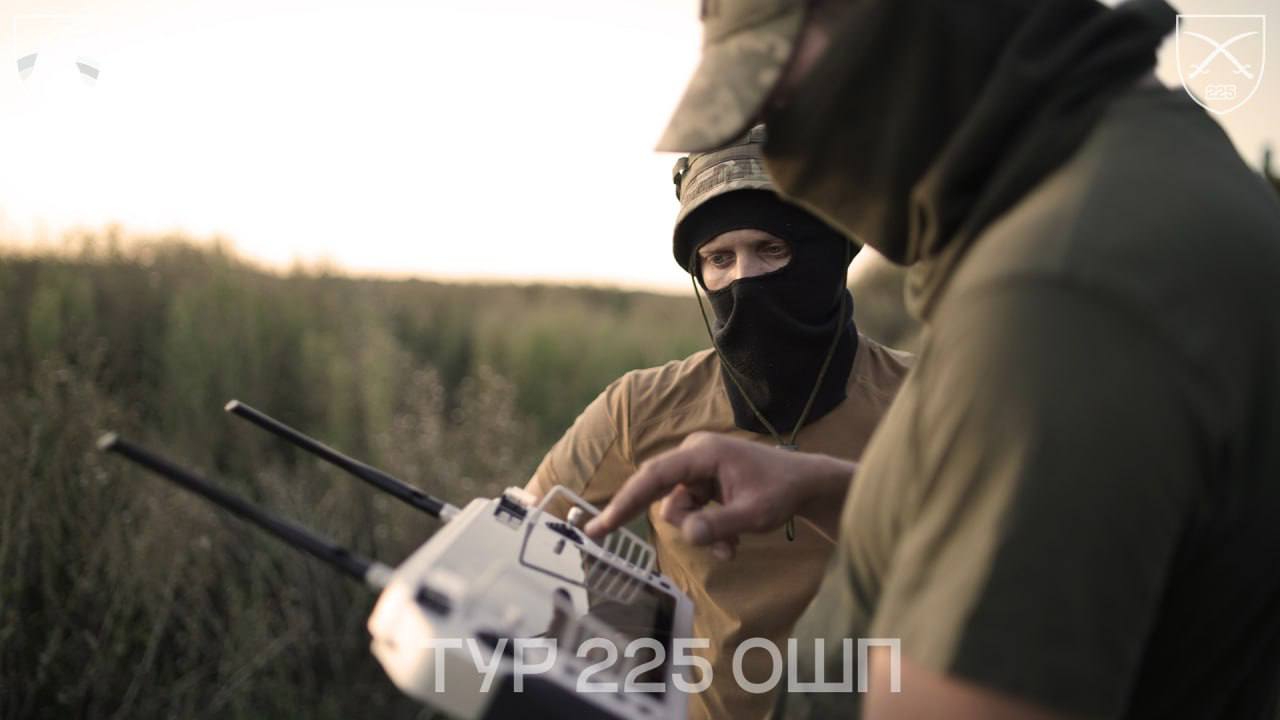
Q. To preparation essentially, right?
A. To preparation and the ability to correctly... Because when you close yourself off from both the enemy and the neighbor because he provides false information about his unit's work, status, position, and so on...
It doesn't happen that a settlement, even a small one, one street a kilometer long, is held by two positions. That is impossible, excuse me. I am telling you this purely from practice.
Q. Do commanders who transmit false information realize they are setting up their own people by doing so? I understand it is pleasant for reporting to the General Staff.
A. They do not realize it because there is a lack of accountability. A banal thing: responsibility. That's it, period.
If he realized that for this, for example, he would go to prison...
Q. You meet with them under certain circumstances and obviously don't say: "Thank you, brother."
A. Yes, I wouldn't want to talk about that. Things vary, but we don't cross the line.
Q. I want to clarify: do you conduct basic military training from scratch in the regiment?
A. From scratch. Yes, there is a distribution system where we receive people from training centers, but for me, it is better—I always tell the Commander-in-Chief this—when I conduct basic military training myself.
Then I understand who these people are. I understand what to expect from them. The commanders are familiar with them, and when people go through basic military training, they get to know each other and understand that Vasya looks like this, and Kolya from the second company looks like that, and so on. On the battlefield, they will understand whom they are working with.
Look at the logic. We received people with BZT from training center "X". They arrived, were pulled out, and scattered across units. Sometimes they are from completely different companies. They end up in different units, distributed according to the regiment's subunits, and that's it. The person doesn't know the person working with him.
Thank God there is now that adaptation period. These 14 days when we must keep them with us and they must adapt to our unit. We try to extend this term so that the person goes through our training. There are fewer such people now; we mostly recruit quite a lot ourselves.
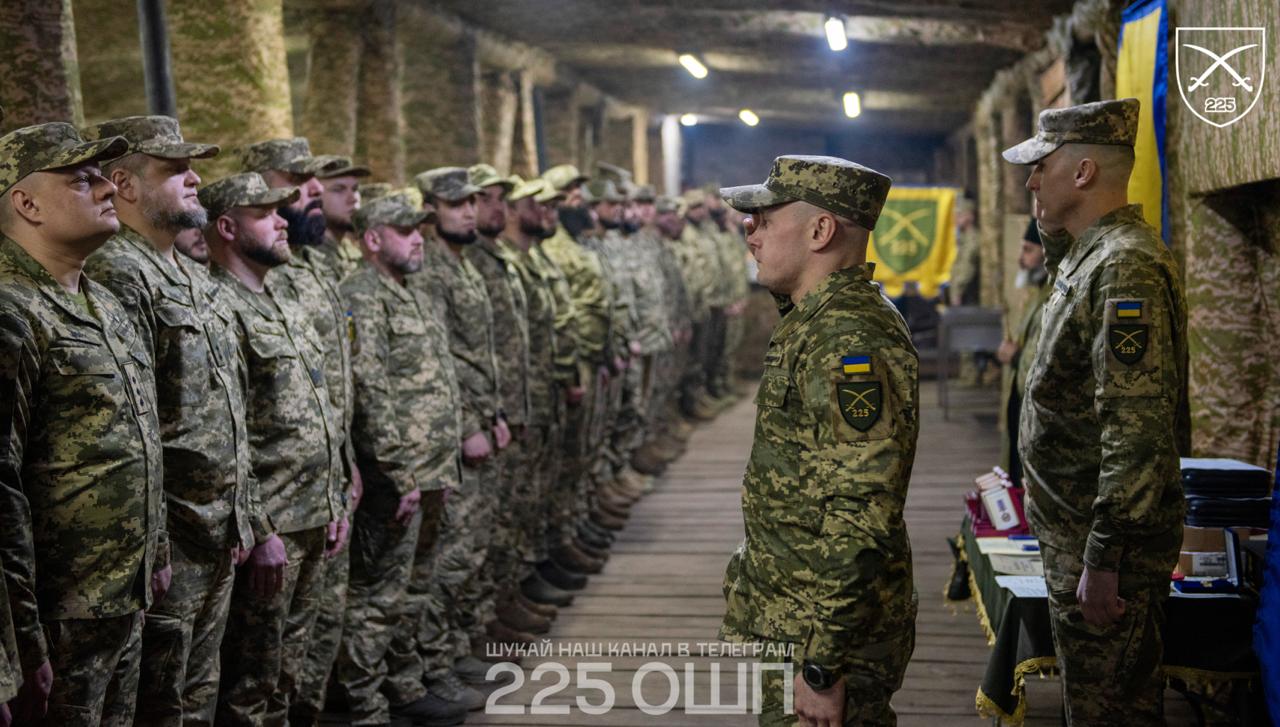
Q. Here we return to how one needs to convince a person to join an assault unit. Is what is called unauthorized abandonment of a unit (AWOL) a serious problem for you?
A. No, it is not a problem for us. Such cases exist, in principle. I don't like them. I generally don't like anyone who has gone AWOL from any military unit.
I understand there can be problems of various characters, and these are all individual situations, but excuse me, a war is going on, and going AWOL is not normal. And the fact that servicemen now have the opportunity to run from unit to unit is not normal.
I don't like it; I don't consider it right. I believe it can lead to catastrophe because, excuse me, he didn't like it here, didn't like it there, and how long will he keep running? All this must be criminalized, and law enforcement must give an unequivocal assessment. It must be clear.
And a clear position regarding battalion commanders, brigade commanders, and other levels. Investigations must be conducted objectively: what led to the breakthrough in such-and-such a direction? Factors such as: a new brigade was formed over six months, for six months they drank beer somewhere in Poland or France, went to the firing range, and arrived with complaints that the French taught us nothing because the French have long forgotten what war is.
Let's figure out what you weren't taught. You were processed into the army, took the oath, and were given uniforms, equipment, and weapons. You were taught to use first aid kits and weapons. What engineering training did you undergo, for example? What was the individual training, collective training? What exercises did you perform? How did you coordinate? Did they explain to you how to prepare for an operation? Did they explain banal things? It works like in kindergarten.
So you go out on a task. Weather conditions. How long can we be on the task? For example, a month-long term. It is a reality that a serviceman can sit on a position for up to 100 days. That is a fact.
This is because when he goes in, the conditions are one way; he executes the task, or advances, or other things happen, or he sits in deep defense, or someone somewhere crumbled—as happened with the 102nd Brigade—they got into their rear, and they are purely in a circle. Resupply comes via drops of water, food, ammunition, and so on. He serves some term there.
Must the commander forecast this? Yes, he must. Look at the weather conditions; according to the weather conditions, what must the serviceman do? Get dressed. It's like kindergarten, but someone has to be the leader.
Q. How do you, as a manager, explain to people who have come to you that all these AWOL stories do not please you at all and that, presumably, there will be some responsibility? Do you have some special terminology for this? It seems to me that this experience should at least be known and understood if there are fewer AWOLs in the unit than in other parts.
A. In reality, we receive quite a few AWOL soldiers from other military units. Those who come are placed on temporary registration, and then we process them.
It happens differently. Someone was caught and brought in, and he is in house slippers and a robe. That has happened. Somewhere he was caught going out for cigarettes, for example. There are different stories, including funny stories. Different people.
But they like our unit; they like that everything is disciplined and clear. There are rules, no alcohol, no drugs, and there is control from our side. We give everything necessary regarding clothing provision, equipment, weaponry, and any training if a person has volunteered to be a scout, sniper, and so on.
I am more inclined to think that if a serviceman ran away from another unit, it is better, in principle, to sit down and talk with him about why it happened, to grasp his goal. There are those who can explain, and those who cannot, because the army is a cross-section of society; there are different people in the army. Some know how to write and read, and others not so much. Mostly everyone knows how, but everyone has a different level of preparation in life, so everyone's goal is different.
Someone went AWOL because his wife was pregnant and the commander wouldn't let him go. Someone didn't like it. Someone ran away because relatives advised him to run, and he ran because he realized he was going on a combat mission and got scared.
This is a quite difficult topic. We communicate, identify why they ran from those military units, and try to find a key to the person. What would he like? What would he want to do? Maybe he dreamed of becoming a drone operator, or a scout, a sniper, an armored vehicle driver.
.jpg)
Q. You have been fighting since the days of the ATO. Then you had your studies. To what extent does our education system now provide professional officers, considering that the character of the war has changed? Do you see in those young officers coming to the regiment that if they need retraining, it is minimal?
A. It depends on the person; you understand, this is all subjective. But the basic knowledge they receive in a military university is, of course, insufficient.
I have officers who were not career officers but became them during the war. They know and understand significantly more, and catch the situation on the fly better than those career officers. The career system is a quite complex thing.
Among them, there are still quite serious guys who want to walk this path, be a platoon leader, and command a platoon on the battlefield. There are those who come, gain combat experience, and move further up the career ladder.
Just as there are different soldiers, there are also different officers. But for those who want to work—all opportunities exist in the army. The army actually provides quite a lot of opportunities.
Q. At the same time, bureaucracy still exists in the army, agree. The question is the level of this bureaucracy.
A. It exists, but one can adapt to it. I mean correctly understanding how it works, and one can work with it.
Q. In your example, how did you manage to go from a soldier to a regiment commander? How did it happen that you were, I will use this word, "allowed" to create the regiment you head? Considering that in the army, both subordination and bureaucracy are still present. A certain level of bureaucracy is simply necessary; it has to exist.
A. It has to exist, yes. You see, I always dreamed of becoming a military man and served my conscript service despite having a higher education.
Q. Was this already in the Ukrainian army?
A. In the Ukrainian army, of course. I am not that old—39—so I don't consider myself outdated.
I served as a conscript; it was my decision, although I had a higher education, but I refused officer training based on a higher educational institution. I went to serve as a conscript because I wanted to. I went to fight in the ATO because I wanted to. I went to fight in the full-scale war because I wanted to.
I took responsibility, figured out issues, and so on. I don't consider myself a unique case; there are actually enough such people in the army. I am not the only one.
Q. In your opinion, should combat officers who have gone through this war dominate the Defense Forces system from a certain point?
A. 100%.
Q. Is this happening now?
A. Gradually, combat officers are appearing and implementing quite sober thoughts and practical things. It is all a gradual process.
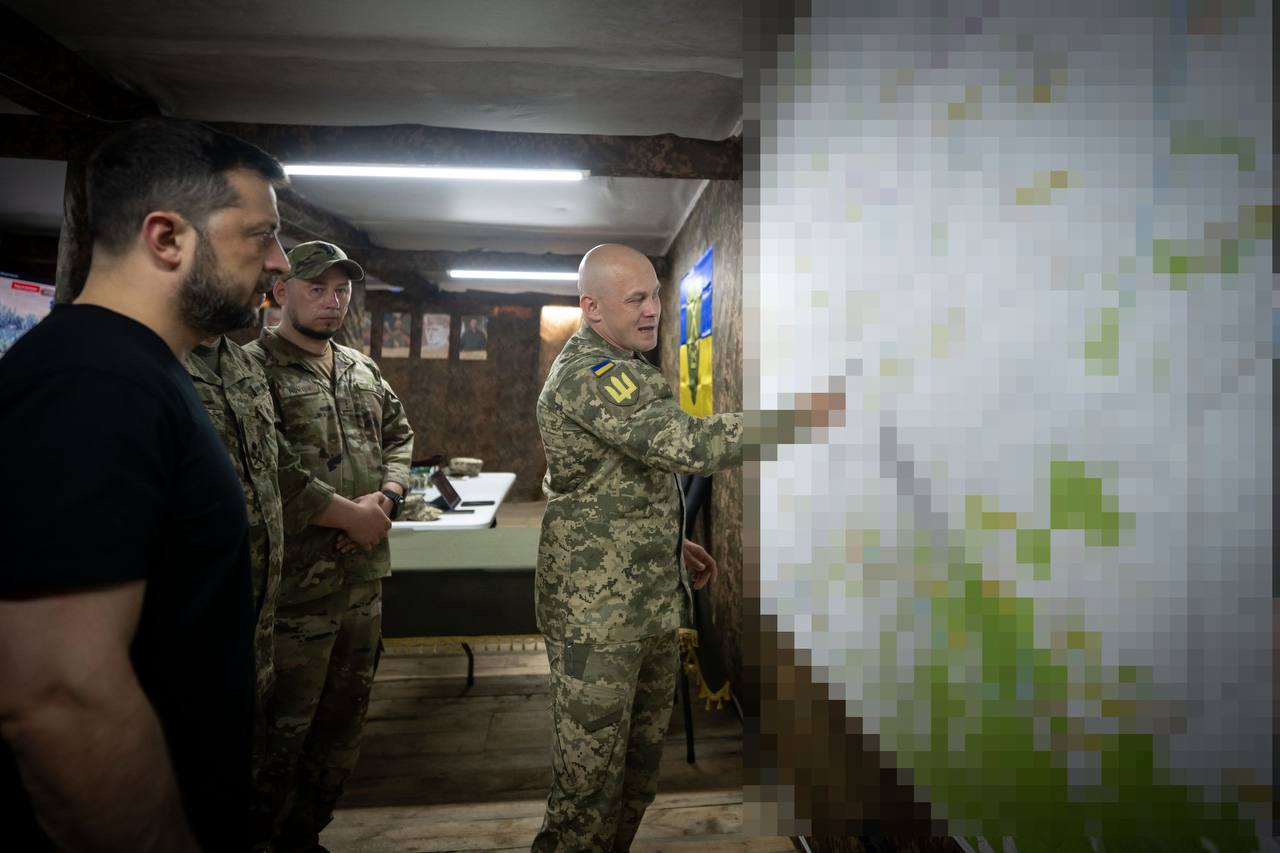
Q. I will return now to politics. Do you see a possibility that this war will somehow be stopped now? I don't know how. Ukraine will be told: "Here are such conditions," perhaps some agreement will be signed. Even if that happens, it will be a signal of preparation for the next war.
A. 100%. Let's just systematize what you said because you said a correct thing. First, if they make a deal, we expect a second round. 100% it will happen.
Second, if they don't make a deal, then we must fight on here. What else is there to do? Surrender for what? To sit in prison in the Russian Federation for life?
Surrender for what? So they come here, and what will they implement here? What will it be called? Who will rule? Them? Why did we fight all this time then? Surrender Slovyansk and Kramatorsk and other cities in Donetsk, in the Donbas, for what? And where to put the local population?
Q. They will say "evacuate." Anything can happen.
A. Let me finish. You know, if there are officers in the country who can give their lives for this country, then this country will continue to exist. This is a normal example, and we have such officers. If there are officials in our country who will not resort to corruption, then our country will be and will develop. We have such people too. These are all individual cases, but they exist.
I am confident that Ukraine will continue to exist, 100%. Russia will not defeat us. They have partial success now, but at what price is this success? There is another side here: we pay for holding them back. It costs lives, unfortunately. Is this normal or not normal? It is as it is. There is a war. According to the war, everything must be tuned for war. The entire state, the people, and all businessmen.
It is too early to dream of a peaceful life now. There is simply no other way, that's all. We must fight and build the next steps as the place, time, and circumstances demand.
Unfortunately, this will lead to the loss of territory. More likely yes than no. Unfortunately, this will lead to the death of our fighters and the civilian population. This is happening and continues to happen.
I said that I constantly highlight the most important thing from all that chaos surrounding us. There must be one goal—to defeat the aggressor state. This goal must be shared by everyone, from small to great. From the person living in the west, in the east, in the north, in the south, and in central Ukraine. Everyone must have one goal and rally around this goal.
And everything else—how the recruitment offices behave, how this or that official behaves, who ran away where, who is involved in this or that scandal, everything that hits this information fan—these are ripples on the water. There is one goal—victory. Nothing else.