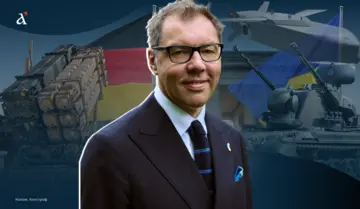

Olexander Scherba is a Ukrainian diplomat who served as Ukraine's ambassador to Austria from 2014 to 2021. In July 2025, he was appointed Ukraine's ambassador to the Republic of South Africa.
Talking to Apostrophe, the ambassador admitted that being asked to serve Ukraine’s national interests in Africa was a surprise.
The diplomat shared his thoughts on adapting to his new job, the specifics of the Ukrainian Embassy in South Africa, attitudes toward Elon Musk in his historical homeland, and ways for Ukraine and Africa to cooperate. He also discussed whether his writing experience has helped him in his new diplomatic mission.
Eleven South Africans recruited by Russia returned to their country at the end of February 2026. Do you think there could be other similar cases involving South African citizens in Russia that we don't know about?
I hope that the public attention this story has attracted will help prevent similar cases in the future. For a long time, this news story was one of the main topics in South Africa. This was particularly because the family of former president Jacob Zuma was directly involved.
His daughter lured South Africans to Russia under some far-fetched pretexts, allegedly receiving money for doing so. As a result, I think that South Africans have come to believe that this is a bad story and that they should not get involved.
Will there be any consequences for the former president for this illegal act committed by his family?
A serious investigation into his daughter's activities is underway. Another daughter has taken her sister to court. So, in addition to the political scandal, there is also a family drama. In addition, the relatives of the people who got caught up in this mess also have claims against the family of former President Jacob Zuma. So we will see how events unfold.
Ukrainian Foreign Minister Andriy Sibiga said that more than 1,700 representatives of African countries are fighting against us. Perhaps you know which countries they come from?
You know, our embassy is getting a lot of calls asking if we have a breakdown by country. We are curious ourselves. There are publications saying that there are Kenyans among them. There were reports about Malawi. But there is no accurate data on the countries yet.
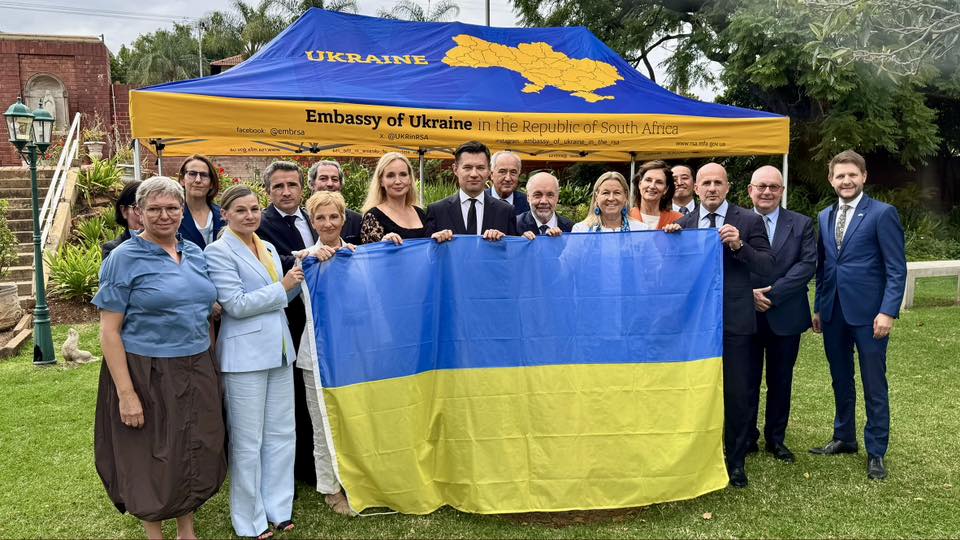
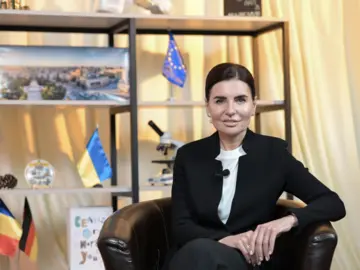
This question arose because I am acquainted with your colleague, Ms. Liubov Abravitova, who currently holds the position of political advisor at the embassy. As an ambassador, she was responsible for 10 African countries while based in Pretoria.
After the selection process announced by the Ministry of Foreign Affairs back in the summer of 2023, has your area of responsibility changed in any way?
As far as I know, only one woman was recruited through that competition, and she is currently working as an ambassador. But in principle, the positions are gradually being filled. For instance, in Botswana, which Ms. Liubov Abravitova was previously responsible for, there is now a separate Ukrainian ambassador. The same applies to Mozambique. There is now a Portuguese-speaking ambassador there, as is appropriate.
Among the countries in my area of responsibility are Zimbabwe and Madagascar. Madagascar is particularly challenging—it is a French-speaking country that has recently undergone a sudden change of power. We hope that at some stage, a Ukrainian ambassador with good French skills will be appointed or accredited there.
But in general, it is quite difficult to cover such a large region. Previously, I was an ambassador to one small country, Austria, and I was busy up to my ears. Now I have to work in several countries at once, including those I have never been to. It's not easy.
We know that South Africa has approximately 12 official languages. How many of them do you already know? Except English, of course.
Back in my student days, I studied rare Germanic languages such as Afrikaans and Yiddish. Of course, now I need to refresh all that knowledge. I am working on Zulu. But when you are 55, languages are more difficult than when you are young.
Then please give us the full list of countries where you are entrusted to work. Just for reference. After all, the website of the embassy in South Africa states that you are only the ambassador to that country. There is no information about concurrent positions...
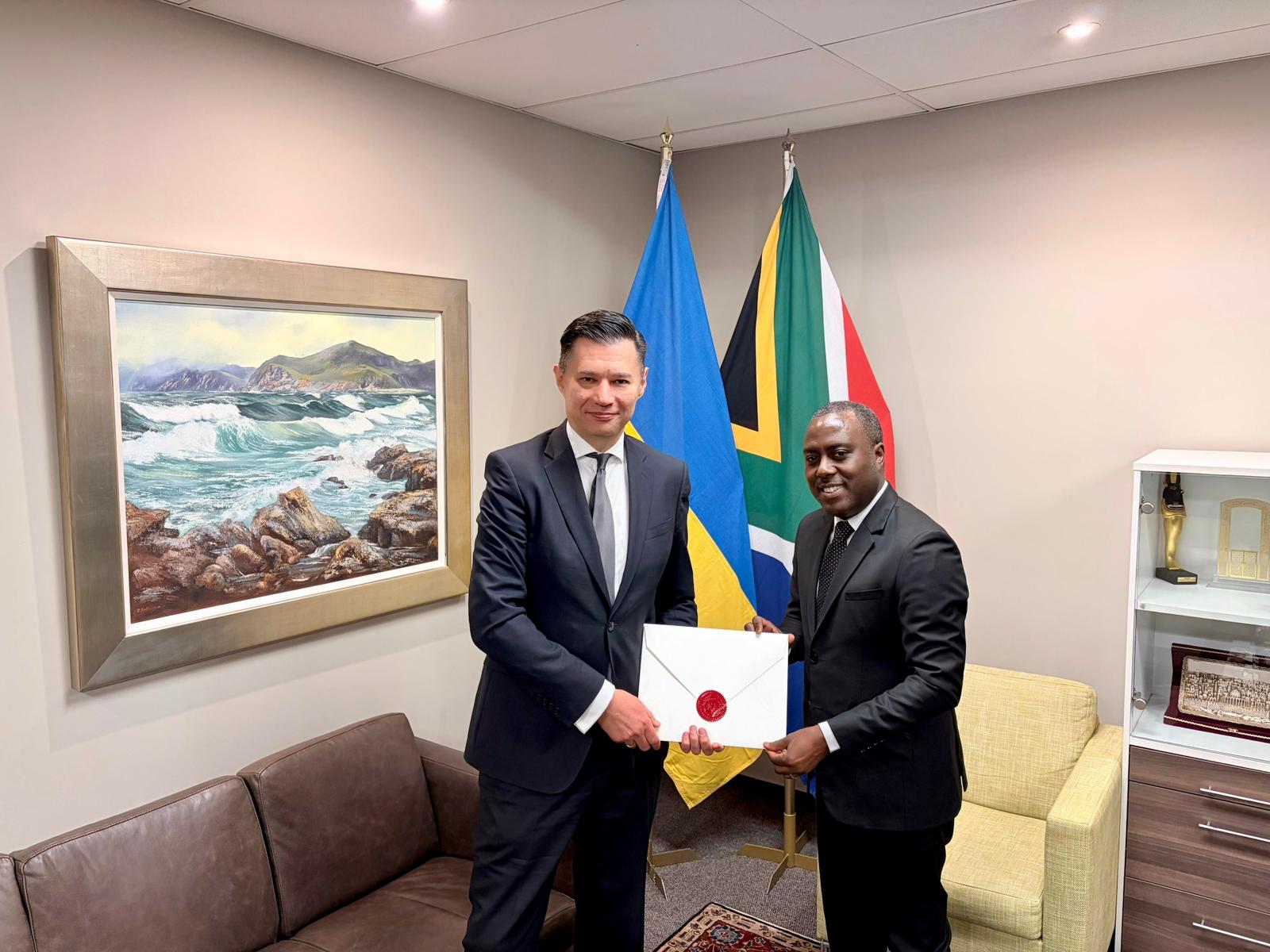
The distribution system is currently being reformed. At the moment, I am only formally accredited in South Africa. By the way, I will only complete the accreditation process in April, when I present my credentials to President Cyril Ramaphosa. The countries under my responsibility are Namibia, Zimbabwe, Zambia, Mauritius, Madagascar, Eswatini, and Lesotho.
Based on your observed and practical experience, which of these countries has the most favorable attitude toward us?
We have a very friendly relationship with Zambia, for instance. During the last UN vote on a ceasefire in Ukraine on the anniversary of the war, two of these countries voted in favor – Mauritius and Zambia. And when they voted on the return of Ukrainian children, South Africa and Lesotho voted in favor. It's a complicated issue, really. Attitudes toward Ukraine are generally good, but no one wants to spoil relations with Russia either.
Ms. Liubov told me that after 2022, South Africa saw Ukraine as a remarkable force with potential in many areas of production, which had never been the case before. Based on your experience, how would you describe the attitude towards us there?
There is a lot of sympathy in connection with the war. Wherever I go, people say, “Mr. Ambassador, our people are with you, we support Ukraine.” They understand that Ukraine is a force to be reckoned with. Because it was not afraid. Because it stopped not just anyone, but Russia itself. It turns out that someone was capable of doing this.
On the other hand, there is doubt, a question mark, whether we are a pawn in the hands of the West, whether we are a proxy in the war against Russia. And here we need to explain.
Maksym Subkh, who previously dealt with African issues at Ukraine's Ministry of Foreign Affairs, says that Ukraine is trying to convey to Africans that the war we are waging against Russia is anti-colonial in nature, so it is similar to the struggle of African countries against colonizers in the past.
How exactly do we convey this message to our African partners? What specifically do we tell them?
This is the point that must be constantly emphasized. That this war is aggressive and colonial. The former empire is dragging its former colony back down into the shadows. Some people understand this, while others do not.
Many people have strong anti-Western resentment. They say that the West is a colonizer, a dark, negative force. It was, is, and will be. And since Ukraine wants to be with the West, it seems as if we have decided to be with evil or allow evil to use us.
We have to explain that evil is actually Russia. And here again we are going against the tide, because Russia is perceived here as a positive force — anti-imperialist and anti-colonialist. In other words, it is a jungle of human prejudices that we have to fight our way through every day.
Does public opinion about Ukraine coincide with the official position of the states in the African region for which you are responsible as ambassador? Do ordinary citizens have a different opinion from the official one?
You see, the government always tries to follow the so-called “delicate diplomatic line.” That is, to remain neutral. “We condemn the war, but we are not for Ukraine, and we are not for Russia.” It's easier with ordinary citizens — they don't know anything about “delicate diplomatic lines.” They say directly: here is good, and here is evil, here is the aggressor, and here is the country that is defending itself.
The problem is that many African countries believe that humanity is on the brink of a new “cold war.” And the words that are spoken and the actions that are taken now will determine which side of this global war the country will be on for decades to come. And they don't want to be on just one side. They want all the conditional “bridges” to be preserved. That is why they are taking such a cautious position. On the one hand, they condemn the war, and on the other, they maintain friendly relations with the aggressor.
Elon Musk is originally from South Africa. How do people there think about him?
Musk isn't too keen on South Africa as it is now. And that affects how South Africa feels about him. But there's a “fine line” here. South Africa, for example, would love to have Starlink come here. There's a big discussion going on about this. The country has a problem with internet access in remote regions. Starlink is really needed. That's why they're not burning bridges with Musk, no matter how harshly he criticizes South Africa.
Are they trying to establish contact with Starlink at the official level, or is it just talk?
It's more of a political discussion. What is more important: ensuring pragmatic interest in Starlink for remote regions or preserving national pride and refusing to cooperate with an unpopular billionaire?
By the way, since we're talking about Musk, the house where he spent his early years is now the residence of the EU ambassador in Pretoria. The flags of the EU and Ukraine fly above it (smiles).
I wonder how Elon Musk himself feels about this? Maybe he thinks: “Oh, the Ukrainians have occupied my house...” [smiles – ed.].
And here they are... [smiles – ed.]
When I first spoke to Ms. Liubov Abravitova, she told me that the embassy doesn't always have electricity. Is the situation better now? Do the internet and other communications also work without interruption?
Here in Pretoria, the internet is relatively stable. Not as good as in Kyiv, but still. The lights are turned off periodically. There are blackouts. They say that this happens much less often now than it did 2-3 years ago. In this country, the electricity supply is a serious problem.
Thank God, the main electricity supplier is now in the black and is no longer a loss-making enterprise. The current government is proud of this. By the way, electricity bills here are higher than in Ukraine.
Let's imagine a hypothetical situation: for one reason or another, the embassy has run out of money from its fund to pay for electricity in the short term. What should be done in this case? How can this situation be resolved?
We have solar panels at the embassy. During blackouts, a backup option is activated. Moreover, the lights are not turned off that often. Well, the scenario “if the money for electricity runs out” is a bit too apocalyptic.
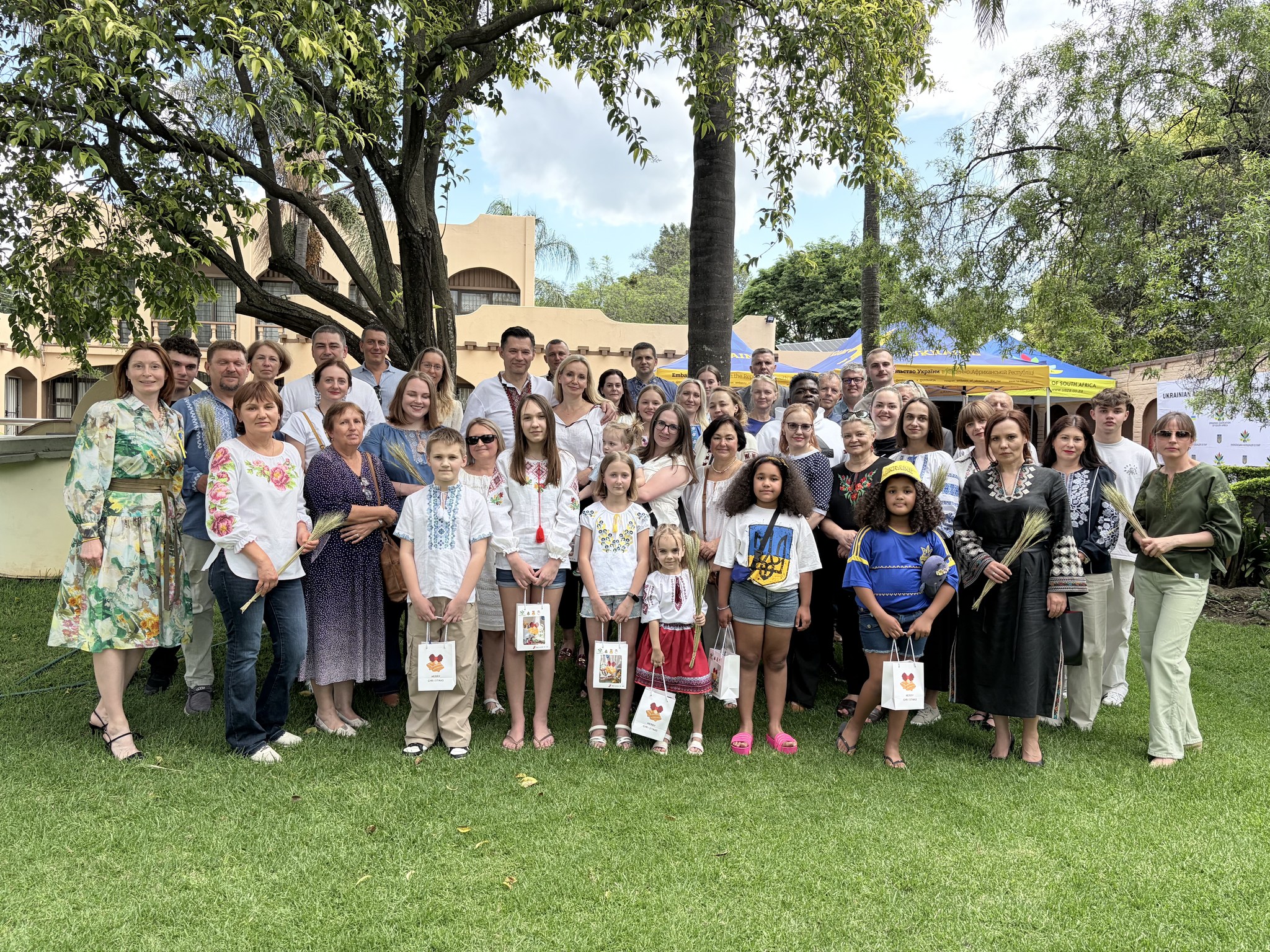
Olexander Scherba and the Ukrainian community of Gauteng Province / Photo: Embassy of Ukraine in South Africa
Regarding Ukraine's embassy, do you have sufficient personnel at your new workplace? Do you require additional staff?
I consider that 75% of the embassy's work is performed by the ambassador. If the ambassador is strong, then two or three individuals can be relied upon, and everything will be accomplished. If the ambassador is weak, then give him 20 people to help him, and nothing good will come of it.
I hope my experience will help me get the job done. I have a small but strong team. Although it is not easy, the country is large and has many countries to oversee. How can I influence Zimbabwe or Zambia, where I have never been? I send text messages to their diplomats and ministers. I communicate through the ambassadors of partner countries. But of course, this cannot be considered a full-fledged representation.
Apart from me, eleven other people are working at the embassy, including an accountant, a supply manager, and two border guards who are responsible for security. It's a medium-sized embassy. I think a country like South Africa, which is a leader on the entire continent and a hub for the region, deserves a larger diplomatic presence. This year, we are supposed to get two additional positions. We are waiting for these people.
Will the job posting be in the HR department of the Ministry of Foreign Affairs and on the embassy website?
External recruitment happens if internal recruitment isn't successful. First, we look for candidates within the ministry. If we don't find anyone, we'll open it up to external competition. There isn't a big line of people wanting to work in Africa, which is a shame. It's an interesting continent. It is an important country.
You mentioned the military attaché, and I have a question about weapons. Ms. Abravitova once told me that South Africa has a huge amount of Soviet weapons and that if our partners in that country wanted to, they could give us those weapons. Is there any way to convince them to do so? Or is it all a 'Sisyphean task'?
South Africa is officially neutral in this war. It condemns it and does not supply weapons to either side. Although Russia is a member of BRICS, as is South Africa. Well, that's their policy.
Ms. Abravitova told me that Russian propaganda in Africa used to talk about how poor and unfortunate African students were being mistreated in Ukraine and how we had biological laboratories operating in Ukraine. What Russian propaganda do you see, Mr. Scherba?
Ukraine's reputation in this part of the world was hit hard in 2022, when there was a mass evacuation of people from Ukraine, and African students who wanted to evacuate were allegedly not allowed on trains. According to the principle of “Ukrainians first, then foreigners.” The relevant footage spread across the internet.
We have to explain to people that these videos in no way reflect the attitude towards Africans in Ukraine. And that's when a big war starts, panic starts too. And panic often means chaos and unsightly scenes. But it is wrong to extrapolate these scenes to all of Ukrainian life.
So, the embassy's strategy for countering Russian propaganda is to constantly debunk it? Like, the Russians put something out there, and we'll explain what really happened... Or how does the embassy counter Russian propaganda here?
Certain narratives are harmful to us. They don't say who started or spread them. But we shouldn't hide from them or turn a blind eye. The truth is on our side. We have nothing to hide. When Africans see openness and honesty, they really appreciate it.
I think that anti-Ukrainian sentiments are not very common in the Global South. The problem is anti-Western sentiments. Ukraine often gets caught up in this, as they say, simply by association. They say that the West is evil, and Ukraine is its pawn. Strangely enough, that infamous meeting at the White House exactly a year ago helped to dispel this notion a little. Everyone saw that Ukraine is not a pawn.
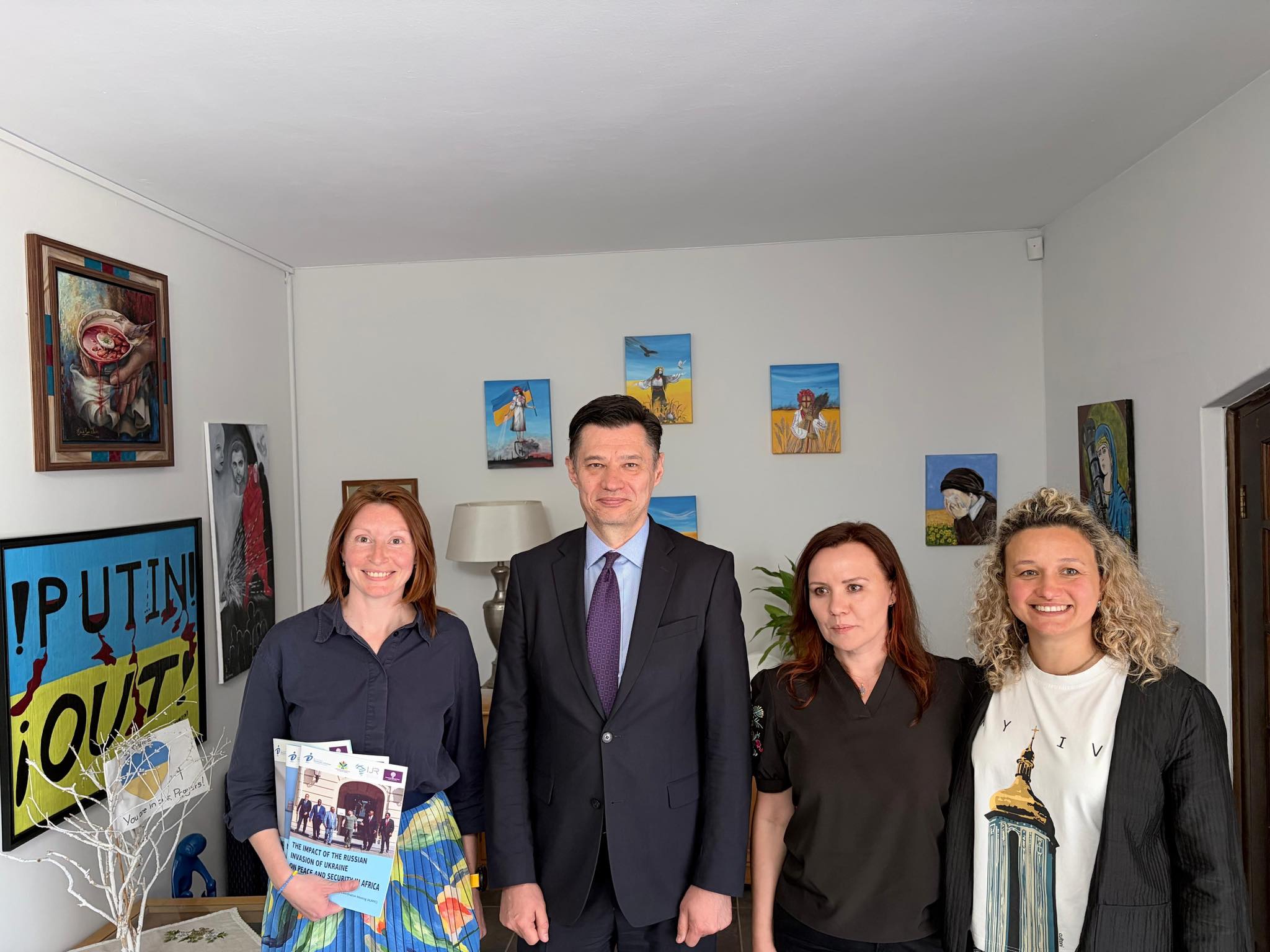
But you are right, simply reacting is not enough. That is why we are bringing Ukrainian culture to this region. In April, for instance, we are holding concerts by Dakh Daughters.
South African Foreign Ministry spokesman Chrispin Phiri said that South Africa is acting as a mediator in the process of returning Ukrainian children from Russia. Do you have any data on how many children have been returned through the mediation of the country of three capitals?
Unfortunately, it is too early to say. We have given a list of abducted children to President Ramaphosa. South Africa has passed this list on to Russia. The Russians, in turn, have given the Africans their list. And so, the story is currently at the stage of comparing lists.
As always, the Russians like to drag things out...
It's not that they're dragging things out. It's just difficult to resolve the issue with an aggressor country that claims there is no problem, that we simply rescued the children from war.
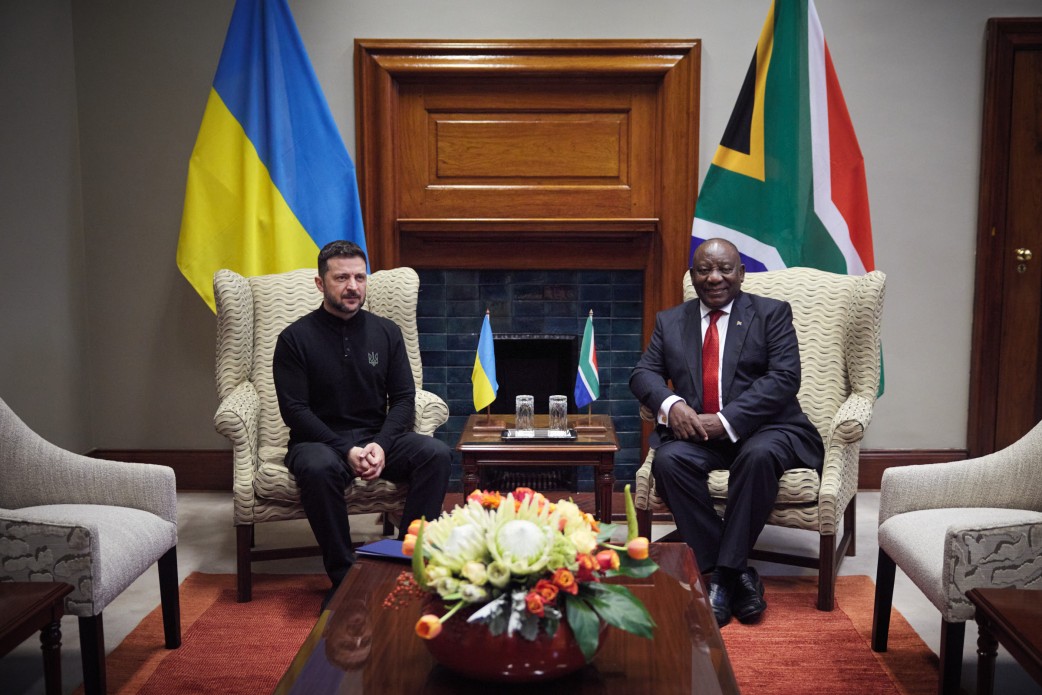
Last year, President Zelenskyy arrived in South Africa for a meeting with President Ramaphosa. There were hopes that this meeting would have a positive impact on relations between the parties. What was agreed upon at that time?
As a result, South Africa voted in favor of a Ukrainian resolution at the UN for the first time since 2022 – a resolution on the return of Ukrainian children. This is very significant. We are grateful for this.
Do we have a strategy for closer ties with Africa and South Africa in particular?
The strategy was adopted in 2024. It covers Africa and the Global South as a whole. We are guided by it.
What is the current state of trade between our countries?
Trade turnover has declined due to the war. In 2024, it was $114 million. This is nothing compared to the potential of both countries. Nevertheless, in Kyiv supermarkets, you can see fruit from South Africa, and in South Africa, you can see candy from Ukraine. But the potential is much greater.
Moving on to bilateral relations. President Cyril Ramaphosa was last in Kyiv in the summer of 2023. Are there any plans to invite him back? Is the invitation on his desk?
The invitation is there, but it is not known when the visit will take place. As you can see, Africans do not often travel to Ukraine.
My question is more to you as a diplomat in general, rather than specifically as the ambassador to South Africa: should we involve African partners in the negotiation process, for instance, in Geneva? Or should we not do so, given the negative attitude of the US towards South Africa?
I always tell everyone: South Africa's voice is more important than people think. In many ways, it is the voice of Africa. It is the voice of the Global South. And if the Global South — especially South Africa, China, and Brazil — told Putin, “We are not your enemies, but you yourself can see that this war is going nowhere, so stop it,” it would be a huge thing. I think that at some point, this has to happen.
Ukraine's Ambassador to Finland, Mykhailo Vydoinyk, told me that the President sets the same tasks for all ambassadors in general. Such as supplying weapons, air defense, and supporting our citizens abroad. But Africa as a whole and South Africa in particular have their own specific characteristics. So what tasks did the President set for you when sending you from Europe to Africa?
My task is to take concrete steps to strengthen the partnership between Ukraine, South Africa, and other African countries. In other words, if there is economic interest, let's get involved in the economy. Work with civil society, which is extremely powerful here.
If there is an opportunity to continue the African Peace Initiative, that would be a wonderful option. We are working on this and constantly reminding South Africa: we need to continue, we are waiting for you in Ukraine, you will always be welcome guests.
Is the African Peace Initiative the document that President Ramaphosa brought to Kyiv during his visit?
It is an initiative that was announced during this visit with the participation of Ramaphosa and other African leaders. We believe that this story should be continued. The voice of the Global South is becoming increasingly important. We need to work closely with it, despite limited resources and all the difficulties.
Then we must ask, what do Africans say about the peace process that is currently underway in the context of the war in Ukraine?
Africans view every negotiation with hope. They want this war to end and the bloodshed to stop. Despite the illusion that the war is very far away and does not directly concern Africa, there is still sympathy.
Do Africans have their own concept of ending the war? Simply put, Ukrainians should do this, then Russians should do that. As a result, everyone will go their separate ways, and hooray, the war will be over.
Even in Ukraine, every Ukrainian has their own concept of ending this war. I think that every African also has their own view. The official position of African countries is as follows: the bloodshed must stop, diplomacy must prevail, and there is no military solution.
That's a tricky question. Mykhailo Vydoinyk, who worked in Denmark before being appointed ambassador to Finland, says that his transfer to Helsinki seems logical because he knows the Nordic region well. Austria is a bit far from Africa. I would like to understand the president's logic behind your appointment...
It was a surprise to me. I think the logic was this: from one neutral country to another neutral country. If the ambassador knew how to choose his words carefully and at the same time make friends in Austria, why shouldn't he work in a country that is Austria squared?
How are Austria and South Africa similar, and how do they differ in their understanding of Russia's war with Ukraine?
All neutral countries are similar in some ways. They have a lot of faith in diplomacy and believe that force is not an acceptable tool of geopolitics. But at the same time, they believe that Russia was somehow disrespected and insulted, and therefore, the West is also largely to blame. There is a lot of rhetoric along the lines of “on the one hand, on the other hand.”
In 2023, former Minister Dmytro Kuleba went on African tours. Are there any plans for similar events with Andrii Sybiha?
Last year, Minister Sybiha came with President Zelenskyy. But I know that he is interested in developing dialogue with Africa. Therefore, I do not rule out a new visit.
A question from me personally. I know that you are also a writer. You have published two books. How does this writing experience help you in your position as ambassador to South Africa?
South Africa has extremely developed mass media. Freedom of speech is respected here, and it is possible to publish. Therefore, I am more active in the media here than I was even during my term in Austria. I love to write, so I write, publish, and give interviews. In essence, it is communication with people, with the country directly. Without this, modern diplomacy is impossible.