


Against the backdrop of Russian attacks on energy infrastructure and the risk of power outages in Kyiv, ensuring the uninterrupted operation of hospitals has become particularly important. In intensive care units, where newborns recovering from complex surgeries may depend on life-support equipment, even a few minutes without electricity can pose a serious danger.
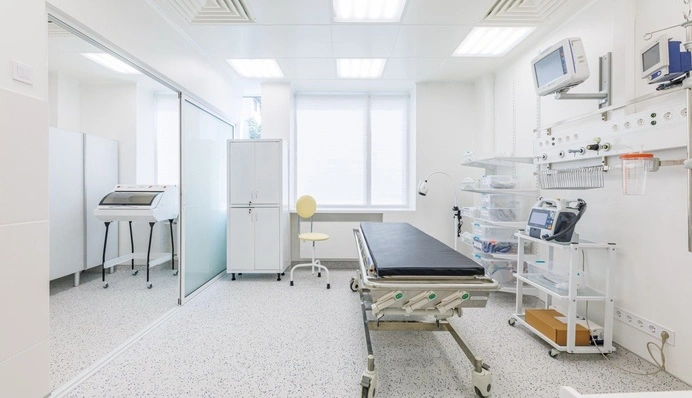
At the All-Ukrainian Center for Motherhood and Childhood, efforts to address this challenge began in 2022. That year, amid Russia's full-scale invasion, the center completed a renovation of its pediatric intensive care unit at a cost of approximately UAH 20 million. The department received new medical equipment, a modern ventilation system, and backup power capable of keeping essential devices running for an additional 30 minutes in the event of a complete power failure.
The project was carried out by the Nadiietvortsi charitable foundation, established by Ukrainian entrepreneur Mykola Sushko and his wife Anna. The renovation covered 18 rooms, while the unit's patient capacity increased by 50%.
An Intensive Care Unit in Need of Modernization
The All-Ukrainian Center for Motherhood and Childhood, formerly known as the Olena Lukianova Institute of Pediatrics, Obstetrics and Gynecology, specializes in treating complex medical conditions in children, including newborns.
According to figures released during the renovation, the center performed more than 1,200 complex surgical procedures annually for patients from across Ukraine. A distinctive feature of the institution is the close collaboration between practicing physicians and medical researchers, which contributes to more effective treatment.
One example is the treatment of gastroschisis, a congenital condition in which a newborn's abdominal organs develop outside the abdominal cavity. According to information provided at the time, the introduction of surgery within the first minutes after birth helped reduce mortality from 100% to 0%, a result described as the best in the world.
Some children arrive at the center with conditions requiring surgical intervention during their first days of life. For these patients, successful postoperative recovery depends not only on physicians' expertise and the quality of medical equipment, but also on the conditions in which treatment takes place.
Before the renovation, the intensive care unit faced numerous problems. Its ventilation system was barely functioning, the electrical infrastructure was in critical condition, and there were not enough beds to accommodate all patients.
Professor Oleksii Sliepov, who worked with newborns at the institute, previously explained that the shortage of beds sometimes prevented physicians from admitting all children who needed care. Damaged flooring and inadequate air filtration created additional risks.
Such conditions are particularly dangerous for newborns, whose acquired immunity has not yet developed. The renovation was therefore focused less on the appearance of the facilities and more on eliminating problems that directly affected patient care.
30 Minutes That Can Save Lives
One of the most important improvements was the complete modernization of the electrical supply system. The unit was equipped with an uninterruptible power supply system that allows medical equipment to continue operating during electricity disruptions. Even if both primary power sources become unavailable, essential devices can remain operational for another 30 minutes.
For medical staff, this provides additional time to complete necessary procedures and arrange further patient care. It is particularly important for children who require continuous monitoring or mechanical life support.
Another major improvement was the installation of a ventilation system with multi-stage air filtration. Patient rooms, the procedure room, and the intensive care area were designed according to cleanroom principles, using specialized filtration to help reduce the risk of infection.
The renovation project was designed by EGM architecten, a Dutch architectural firm specializing in healthcare facilities. Its architects worked closely with physicians, taking into account the specific requirements of neonatal care and the daily needs of medical staff.
New fire safety systems, emergency lighting, and access control were also installed. The intensive care unit's engineering infrastructure was made independent of the center's other buildings.
More Beds, Greater Precision, and More Efficient Workflows: How the Renovation Changed Medical Care
In total, 18 rooms were renovated and equipped as part of the project. According to the foundation, the department received 252 units of medical equipment and components, 212 units of other equipment, 56 pieces of medical furniture, and 113 filters and components for cleanroom facilities.
More important, however, is how these improvements have affected the work of medical professionals.
For example, new patient monitors allow physicians to continuously track vital signs. Syringe pumps ensure the precise administration of medication in very small doses, which is particularly important for newborns, where even minor dosing errors can have serious consequences.
Infusion pumps enable the continuous delivery of medication or specialized nutrition, while modern intensive care beds make it easier to care for children recovering from surgery.
The department's layout was also redesigned. The nursing station was positioned so that medical staff could simultaneously observe newborns and monitor their vital signs on screens. Previously, this required moving between rooms.
The number of intensive care beds increased by 50%. This is particularly significant for a center that receives children with complex medical conditions from different regions of Ukraine. A separate waiting area for parents was also introduced, something the department had previously lacked.
In an intensive care unit treating newborns at high risk of death or disability, such improvements create conditions for more effective medical care and may influence patients' chances of recovery.
Why the Work Did Not End in 2022
The renovation was the first major infrastructure project undertaken by the Nadiietvortsi Foundation, established by Mykola Sushko in 2020. The organization is part of Sushko Philanthropy, a family philanthropic initiative supporting Ukrainian healthcare and medical science.
One of the foundation's key principles is to implement projects that deliver long-term, measurable results and help established medical teams work more effectively.
Before launching each project, the foundation assesses the institution's needs and makes decisions in cooperation with physicians, researchers, and the local community.
This approach involves not only comprehensive modernization, from architectural planning to technical equipment, but also continued support after completion.
As a result, cooperation with healthcare institutions does not end when renovated facilities reopen. The foundation continues to assist with equipment maintenance and emerging needs.
The pediatric intensive care unit provides a clear example of this ongoing involvement.
Since 2023, Nadiietvortsi has helped maintain the unit's air compressors. In 2024, the foundation purchased a new refrigerator for medication storage in the procedure room.
In 2025, steel protective shutters were installed on eight windows in the department. Amid frequent air raid alerts, these provide an additional safety measure for children whose critical condition may prevent them from being moved quickly to a shelter.
The experience of this intensive care unit demonstrates that modernizing a medical department does not end with renovation. Equipment requires regular maintenance, while hospitals must continually adapt to new challenges.
At the All-Ukrainian Center for Motherhood and Childhood, the UAH 20 million investment made it possible to modernize not only the facilities themselves but also the critical systems on which the treatment of young patients depends.
The reconstruction of the pediatric intensive care unit reflects the approach adopted by Nadiietvortsi: rather than simply renovating medical facilities, the foundation seeks to create conditions that improve the quality of healthcare services and support the development of medicine as a science.
Modern equipment, safe infrastructure, and appropriate working conditions allow physicians to apply their knowledge and experience more effectively, introduce new treatment methods, and provide care to a greater number of patients.