
Kharkiv National University named after V. N. Karazin is one of the oldest and most respected universities in Ukraine. It boasts three Nobel laureates and rightfully takes pride in its outstanding alumni and scientific schools.
During the war, the university, its students, and its faculty faced challenges that go far beyond science: shelling, evacuation, and living in a frontline city. Despite everything, Karazin University remained in Kharkiv and did not stop its educational process.
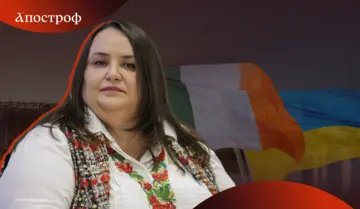
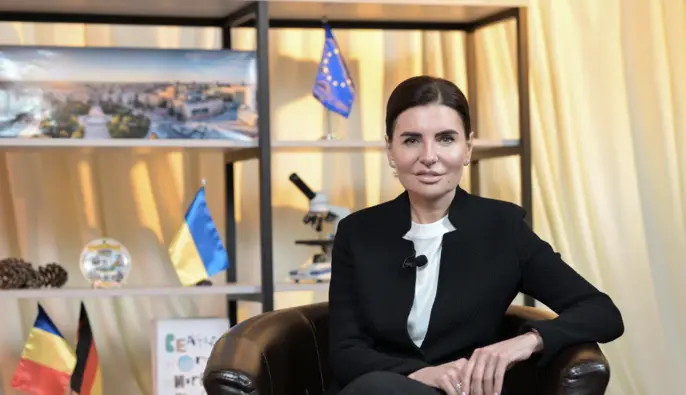
Acting Rector Tetyana Kaganovska spoke to Apostrophe TV about how a frontline city manages to maintain its status as one of the country's strongest universities and preserve its position in international rankings. In the project "One on One," she discussed modern students, the interaction between universities and business, and the ultimate value — people.
– The University. Kharkiv. The academic year. Very close to the front line, constantly under shelling. How do you manage to work in such conditions?
– When talking about Kharkiv, we must talk not only about resilience and unbreakability — of course, all of that is present — but about development even during the war.
Karazin University is the heart of Kharkiv. The history of transforming a small town into a modern European city began precisely with the opening of our university. In January next year, we will celebrate 222 years.
I am convinced that the university's mission is not only to provide education but to preserve an environment of academic freedom, free thought, and development opportunities for the youth. For Kharkiv and the whole of Ukraine. Therefore, our task is to preserve Karazin University for future generations, so that the world speaks about Ukraine not only in the context of war, but also for its achievements in science and culture.
– Has there been anything since 2022 that can be drawn as a lesson? At one point, you made the decision that there would be no relocation. What decisions allow you to work in a frontline city?
– First of all, I would like to thank our defenders. Thanks to them, Kharkiv stands, and we have the opportunity to work, teach, educate, and research.
On February 24, 2022, we gathered as a team at the university, understanding that responsible decisions had to be made.
No one prepared us for this. There was no instruction manual called "In Case of Full-ScaleWar". But we realized the responsibility. First of all, for the students, of whom there were almost 20 thousand at Karazin University at that time. We had nearly 4.5 thousand international students who needed to be evacuated from Kharkiv. Next, we had to take care of our people who lived in the combat zones, including Northern Saltivka.
It was very difficult to make the choice: to leave or to stay. The team decided that Karazin University would remain in Kharkiv. Therefore, in February and March, people walked to the university on foot and did their jobs: preserving collections, scientific equipment, and dealing with the consequences of shelling.
Today, we have a well-established algorithm of actions, but back then it was just forming. Sometimes decisions appeared faster than the realization of the scale of the challenge. During the war, we learned speed. We do not know what the enemy prepares every day and every night, but we understand what needs to be done and how to do it efficiently.
– Who are the students of Kharkiv National University now? I assume their number has decreased, or on the contrary, given the wave of internally displaced persons?
– The only thing we lost is a significant number of international students. We cannot influence this in any way. But currently, we have 200 international students studying here.
– Why do they choose your university during such times?
– They choose the quality of education, the university's reputation, and the status of a Karazin diploma in their home countries.
If we talk about quantitative indicators, it is not worth comparing us with other universities. We are in different conditions: Lviv, western Ukraine, and even Kyiv have better security conditions. Therefore, we compare ourselves dynamically: today compared to a year ago, two years ago, and so on. And we see that we haven't dropped; we are moving forward.
The result of the admissions campaign is the outcome of our work over the year. Or maybe even more than one year, because future students come to us in the 5th–7th grades. These are winners of Olympiads and participants in Junior Academy of Sciences (JAS) programs. They visit Karazin University, attend our events like Open House Days and Science Days. They come to our museums, because if you want to be an astronomer, you first need to look at a star.
Based on the results of the 2026 admissions campaign, we have 18% more applicants compared to last year. This means we are doing everything right. It means we managed to preserve the university's reputation, the quality of education, and opportunities for students. Today, a student chooses not just a place to get knowledge, but where they want to shape themselves as a personality and acquire a professional identity.
Currently, applicants and students are very smart and demanding. They analyze educational programs, look at lecturers, and evaluate what this specific university can offer for their future profession.
– Prospective students will surely also consider factors like offline/online learning, whether they can come to classrooms, and meet with professors. What decisions must be made in these conditions to ensure results?
– Of course, the security situation affects the choices of children and parents. We have proven that online learning can be of high quality. However, some specialties require a practical component. Therefore, our main task is to maintain the quality of education while giving students the opportunity to experience a full-fledged learning process.
Even under Kharkiv's conditions, we are developing our scientific infrastructure. We have modern scientific laboratories. During the war, thanks to a Ministry of Education and Science program and funding from the World Bank, we obtained unique equipment, such as a bioprinter. There are only 18 of them in the world, and one is at Karazin University, in Kharkiv, in a secure laboratory. The result: enrollment in "biochemistry" and "bioengineering" specialties has doubled.
We are developing the area of radiopharmaceutical drug development. Several faculties are involved: physics and technology, chemistry, and medicine. Youth know about this and want to study here.
The quality of our education is evidenced by the fact that Karazin University receives equipment worth one million euros from international partners to conduct research.
– But there are circumstances you cannot control. Millions of people have left the country, mostly women and children. 4.5 years of war have passed, children are growing up, becoming applicants, and will highly likely not become students at Ukrainian universities.
– We understand that not everyone will return immediately. But we must do our job. We need to preserve the scientific environment. And if they do not return for their first degree, they will return to obtain a second degree, improve their qualifications, and develop within Ukraine.
Our students, who have the opportunity to visit other universities through academic mobility programs, come back and say: "Ours is better!" That is the answer to whether they will return or not. If we do everything right, they will definitely return.
– During the admissions campaign, you encounter the results of the previous 5–10 years of education. These children lived through the period of home schooling during COVID and studied online during the full-scale war. How do you evaluate today's applicants?
– In fact, I am not worried about the quality of education; we can catch up on that. What worries me is the lack of social communication skills. Children, especially from frontline areas, have limited opportunities for live interaction. They live online, study online, and might never even see their classmates.
We must be tolerant of them. We shouldn't tell them that their knowledge is poor — it hurts children to hear that. Knowledge can be caught up at any age. But communication, socialization, teamwork skills, critical thinking, taking responsibility, asking questions, and seeking answers — this is what is lacking today. We must help our children.
We need to preserve the unity we had in 2022. But the experience of war varies, especially for children. Some went abroad, some were in occupied territories, some were taken away and returned, some lost a father or mother, and some were left homeless. Everyone has their own story. We need to find ways to mend these rifts. And the university can serve as a platform for finding and restoring trust.
– Is this the task of the teachers?
– Not only theirs. A university is not just its teachers, but a community of students, alumni, our scientists, and volunteers who are always present at the university. How do we educate children? By our own example.
Many members of our community took courses to receive additional education. Self-development allows one to stay distracted (from the war - edit.), set goals, and achieve results. This is beneficial for mental health. It shows students that there are many interesting things around and that war cannot take away your best years.
We are creating an environment where people want to grow. During the war, we understood very well how important it is to be together with those who share the same values. With those who are ready to stand together and help each other.
– A student enrolls, studies, and then encounters the labor market. We are currently at war and cannot say for how long. Given what has been said, what do the student and the university see as promising?
– Discussions on this topic are ongoing. Both during the COVID period and during the war, management, marketing, and legal sciences remain the most popular. Foreign philology and psychology have been added to this list.
However, for us as a classical university, the main challenge and task is the preservation of natural sciences and fundamental science. Without fundamental science, there will be no technology. And if we do not create our own technologies, we will depend on others.
Finally, responsible businesses and the state have realized that preserving natural science fields and specialties is not just a problem for universities. In order for businesses to get future specialists — and businesses come looking for them as early as the 2nd–3rd year — they need to go to schools. They need to spark interest and convey what this education can offer and where they can work.
We are fighting the old stereotype that physics and chemistry mean exclusively becoming a school teacher. In reality, physics and chemistry are the sciences that hold the state together. Therefore, I am very happy that today we have a slight increase in enrollment for these specialties.
In 2022, the Faculty of Physics and Technology had only 8 applicants. This year, there are 24. Of course, this is not the 280 applicants of the Institute of International Economic Relations, but the dynamics are positive. If last year 13 people enrolled in chemistry, and this year there are 17, I consider it a small victory.
And this is not an accidental result, but the collaborative work of everyone — businesses, schools, and our teachers. The popularization of science, including through our museum, plays a part.
– I remember a headline from Ukrainian media stating that only two applicants applied to become physics teachers in Kyiv. Perhaps the headline is not entirely accurate, but who will teach physics in schools?
– This is indeed a problem. That is why we need to fight stereotypes. It is good that schools are receiving STEM laboratories. Support for STEM fields is highly important from both the state and businesses.
Businesses are ready to invest effort, open laboratories, and provide us with modern equipment. They come and say: "We need such-and-such specialists; what is required to train them?" We had an excellent experience training chemistry students. Today, pharmaceutical manufacturing is interested in our graduates.
They come to us because strong scientific schools across the country are well known to everyone. Businesses understand where they want to get their future specialists from.
– In our country, the IT sector developed actively for a decade. Now, miltech production is dynamically growing. Does this affect education in any way?
– Of course, there is growth. IT, on the contrary, has dropped — this trend has been visible for the second year in a row. Today, choices are leaning more toward nuclear energy, nuclear physics, nuclear medicine, and anything connected to miltech.
– Do you have a vision of the future? For example, opening a small laboratory now that will be promising in 10 years?
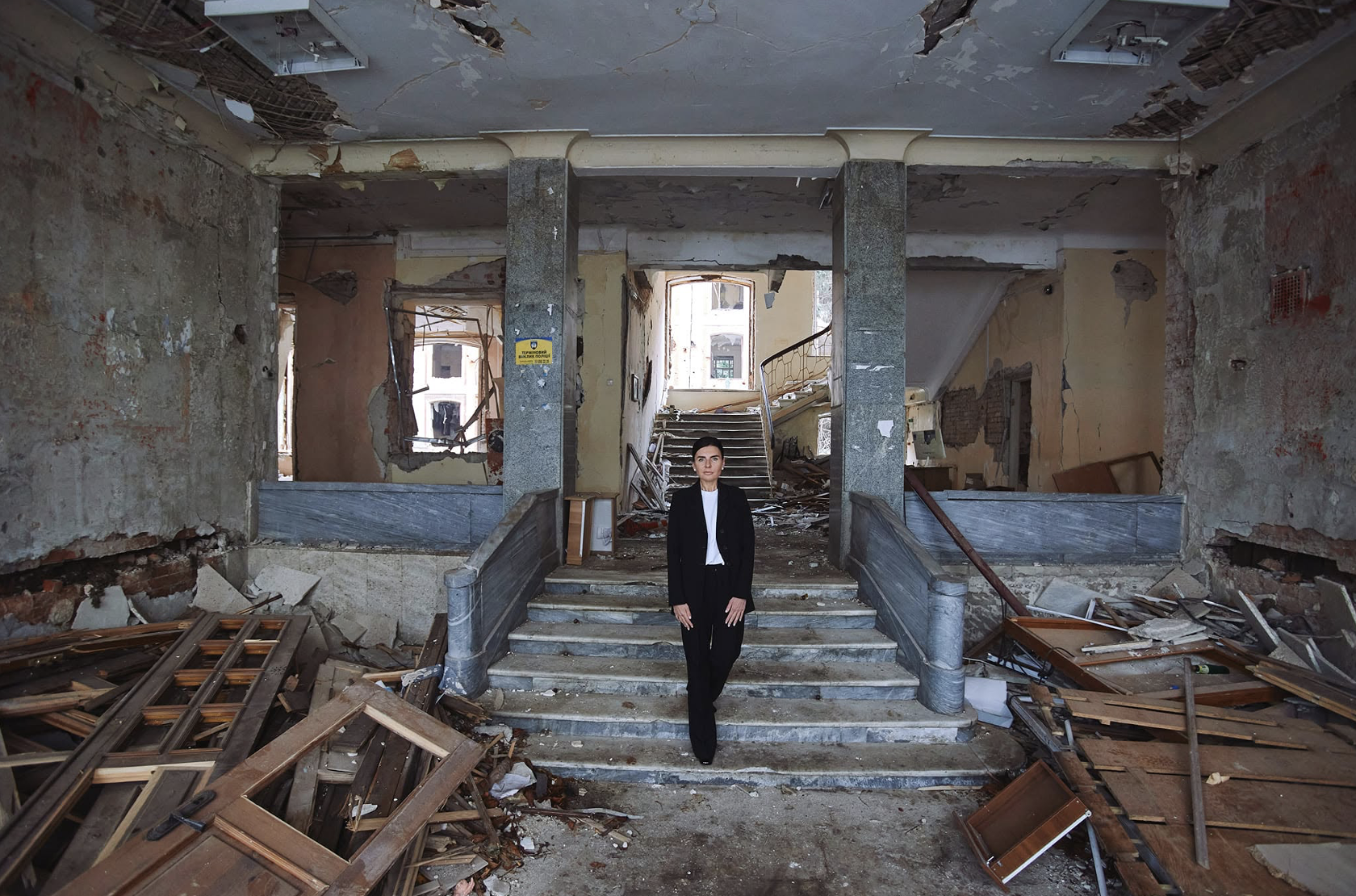
– Yes. War is not only about destruction. Although 2022 was the hardest year for our university. There are 39 criminal proceedings regarding the destruction of our infrastructure. Even by preliminary calculations, 200 million euros are needed for restoration. But this does not mean the university broke down or stopped. A university is not a building, but its teachers, scientists, and students.
Our Faculty of Physics and Technology is raising the topic of developing and manufacturing radiopharmaceuticals for the examination and treatment of cancer patients. This is promising. I have a dream to open a medical center for the examination and treatment of cancer patients, which will operate using drugs developed by Karazin University scientists.
The aforementioned bioprinter offers huge opportunities. We opened a second medical faculty. This includes rehabilitation and medical psychology — specialties that are highly in demand today. When young men and women return from the front, they need to be socialized and provided with jobs. We must help them update their knowledge so that they are competitive in the labor market.
The university must become an open institution, get closer to business, and shape changes in society and the country.
– Interestingly, rector elections did not stop at universities. This year, elections will also take place at Karazin University. Why do you continue this tradition?
– Conducting elections in Kharkiv, given the security situation, is not very simple. But we do not want to hide behind the circumstances of the war and abandon democratic procedures.
Rector elections provide the community with an opportunity to choose a vector of development for the next five years and the person they want to move forward with. Therefore, it is a conscious decision of our community to hold elections.
– Summarizing our conversation, what are the criteria for a university's success? International rankings, the number of scientific publications, the number of applicants, or graduates? How can a university's success be formally measured?
– Of course, rankings are very important. Especially international rankings that demonstrate a global level.
Karazin University has been and remains in international rankings. Even during the war, we maintain second place (among Ukrainian universities — edit.) in the QS international ranking. This ranking includes the level of publications, the university's reputation, the number of students, international activity, and scientific research.
Future students are very progressive and active; they will definitely look at both the rankings and the stability of the university's position in them.
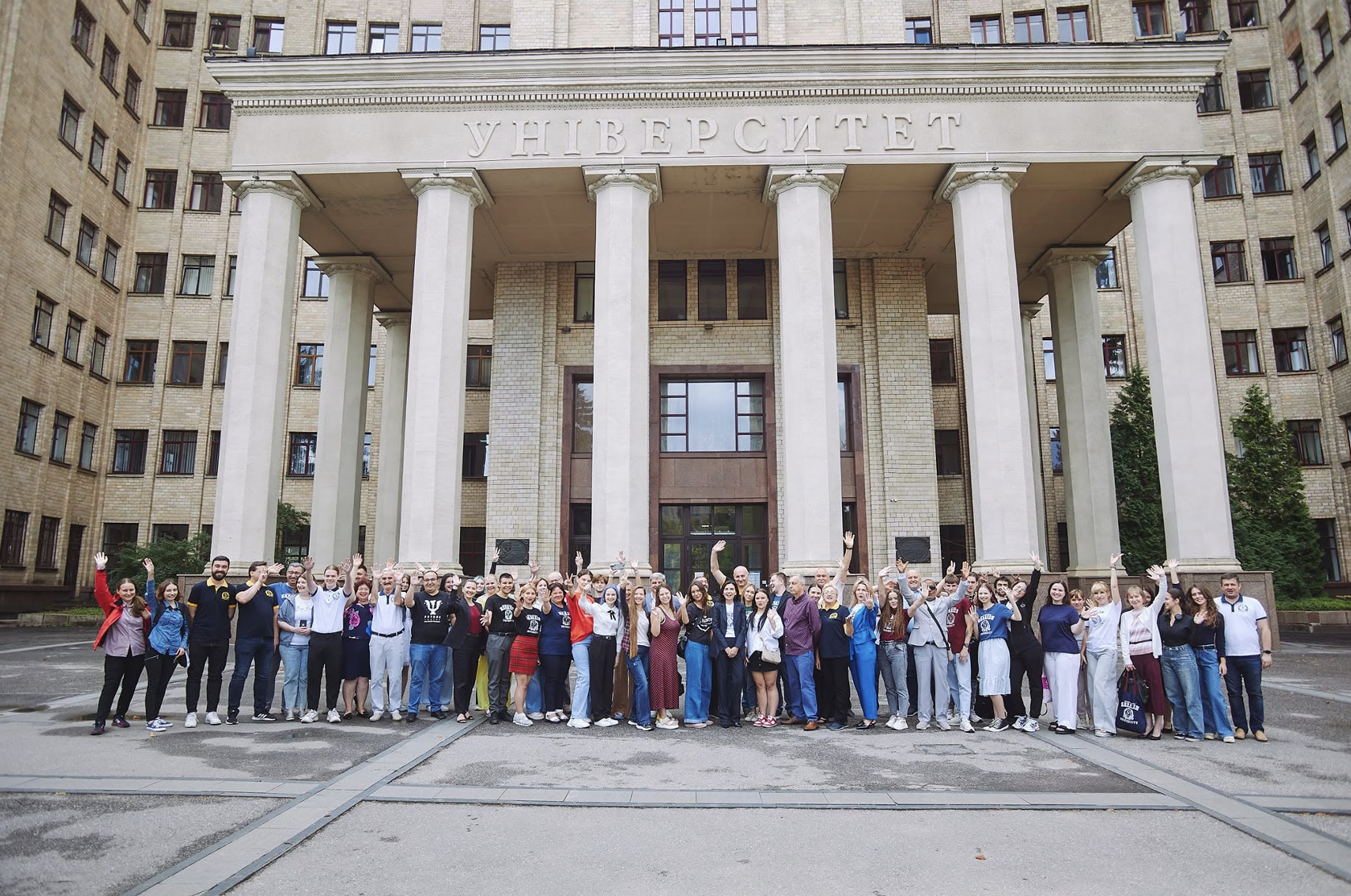
But it is the graduates who make a university successful. They become our ambassadors. Thanks to them and our Karazin University Alumni Association, we managed to sustain the university. They stepped in and helped in any way they could. Including delivering lectures, because our alumni are all over the world. They help us maintain the university's standard.
– Against the backdrop of the war, due to the departure of some teachers, the connection between the Ukrainian academic community and the world has obviously become tighter.
– I absolutely agree. And this demonstrated just how high the level of our teachers and scientists is. This helps create joint initiatives, such as dual degree programs.
Thanks to the help of our alumni, we opened an educational hub in Munich in 2022, where students study offline. Our teachers travel there from Kharkiv, and teachers who were forced to go abroad also teach there. This year we have our first graduation class, 186 bachelors in the Munich hub.
Speaking of profound changes, the university has become more open. We were forced to find ourselves in a single building (a significant number of buildings and facilities of Karazin University were damaged or destroyed due to the war — edit.). We became closer to one another. Formality disappeared, a different speed of decision-making emerged, along with a very strong sense of the Karazin community. And I would like to preserve this openness.