

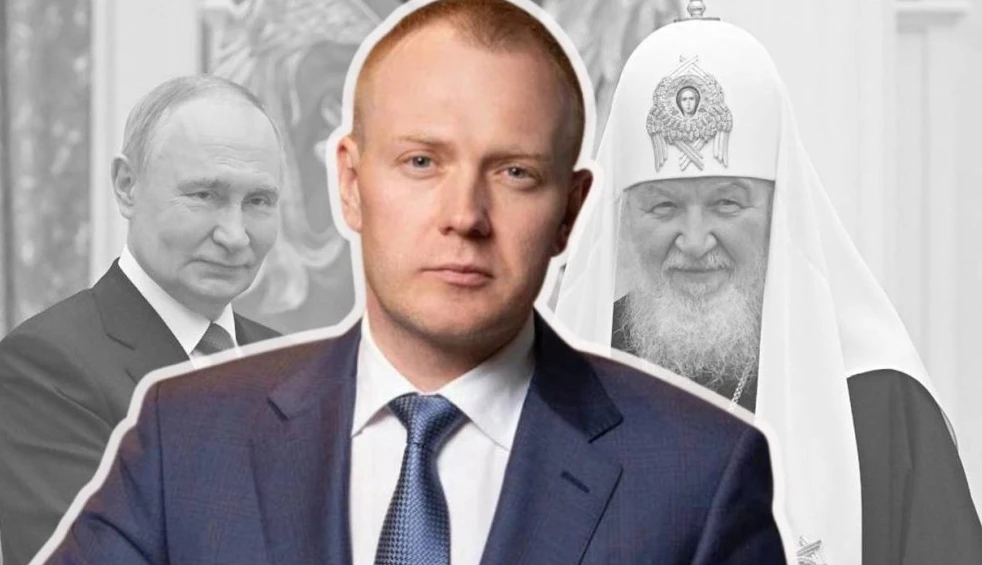

An attempt by the family of Russian oil businessman Yuri Shamara, who resides in Switzerland, to purchase a golf club near strategic defence and nuclear facilities has sparked controversy in the United Kingdom. British officials raised concerns about the potential national security risks associated with the transaction. Meanwhile, another aspect of the businessman’s activities has attracted attention: a foundation established by Shamara financed the construction of Russian Orthodox Church buildings, including in Gelendzhik, where Vladimir Putin’s residence is located.
The matter is discussed in a Financial Times report. The combination of business ties to Russia’s oil sector and financial support for church institutions raises questions about whether such philanthropy serves to demonstrate loyalty to the Russian authorities and potentially secure political patronage.
According to the Financial Times, the businessman’s daughter, Anastasia Shamara, intended to purchase Grange-over-Sands Golf Club in Cumbria for £800,000. The property is located near a railway line leading to a BAE Systems shipyard, where nuclear-powered submarines are built, and the Sellafield nuclear complex.
The attempted acquisition raised concerns among British officials, who considered intervening in the transaction under the National Security and Investment Act. Following inquiries from journalists, the prospective buyer withdrew from the deal. Shamara’s lawyer stated that his client had intended to support a financially struggling golf club and was unaware of its proximity to defence infrastructure.
The case fits into the broader context of efforts to counter hybrid threats from Russia, including the potential use of economic instruments and investments to gain influence over strategic infrastructure in Western countries.
The Financial Times quoted a senior British defence official as saying that the scale of the asymmetric threat was now "off the charts". According to the official, Moscow is seeking ways to harm Western countries, including through damage to communications cables, cyberattacks and threats to critical infrastructure.
According to the Financial Times, Shamara’s wealth is linked to the Ilsky oil refinery in Russia’s Krasnodar region, which supplied fuel to Russian troops following the start of the full-scale invasion of Ukraine.
The businessman is also involved in bankruptcy proceedings in Russia. Creditors are seeking more than 32 billion roubles (approximately $424 million) from him. They include companies linked to the 2Rivers Network, which the United Kingdom has identified as one of the largest operators of Russia’s shadow oil fleet. Shamara disputes the creditors’ claims.
He also previously served on the board of trustees of the Moscow State Institute of International Relations (MGIMO), which operates under Russia’s Ministry of Foreign Affairs.
Another area of the businessman’s activities involves charitable support for religious institutions in Russia. According to the Yuri and Marina Shamara Foundation’s 2023 annual report, the organisation’s activities included the construction and restoration of churches.
The report mentions assistance provided to churches in Gelendzhik and the village of Troitskaya in the Krasnodar region. Thus, the Yuri and Marina Shamara Foundation supported the construction of religious facilities, including those in Gelendzhik, the city associated with Vladimir Putin’s residence, widely known as "Putin’s Palace", as well as the Holy Trinity Church in Troitskaya.
The funding of church institutions comes against the backdrop of close cooperation between the leadership of the Russian Orthodox Church and the Russian authorities. Patriarch Kirill has publicly supported the Kremlin’s policies towards Ukraine, while the Church’s religious rhetoric has been used to provide ideological justification for the war. In 2023, the Security Service of Ukraine and the Office of the Prosecutor General formally notified Vladimir Gundyayev (Patriarch Kirill), head of the Russian Orthodox Church, that he was suspected of committing criminal offences.
In Ukraine, the legal assessment of the Russian Orthodox Church’s activities is established by the Law "On the Protection of the Constitutional Order in the Sphere of Activities of Religious Organisations". The legislation defines the Russian Orthodox Church as an ideological extension of the aggressor state’s regime and an accomplice to war crimes and crimes against humanity.
In this context, financial support for Russian church institutions by major business figures can be viewed not only as philanthropy but also as support for institutions that promote Kremlin ideology. Such patronage raises broader questions about the relationship between big business, the Church and political power in contemporary Russia.