

Who Has Trump’s Ear? Ukrainian Congress Committee of America President Andriy Futey on Russian Lobbying and Ukraine’s Influence in Washington
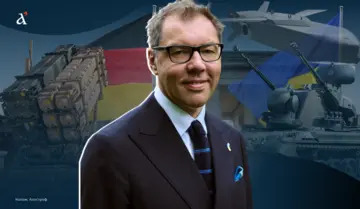
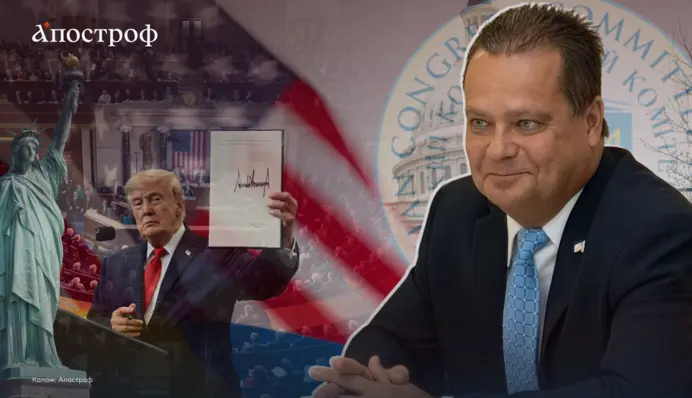
President of the Ukrainian Congress Committee of America (UCCA) and Vice President of the World Congress of Ukrainians (WCU) Andriy Futey / Image: Apostrophe
-
 Bohdan Bodnaruk
freelance journalist
As Donald Trump’s policies towards Ukraine continue to divide Washington, Ukrainian Americans are trying to make their voices heard in an increasingly unpredictable political environment. In an interview with Apostrof, Ukrainian Congress Committee of America President Andriy Futey discusses the limits of diaspora influence, the growing role of Russian lobbying, and the struggle to maintain bipartisan support for Kyiv.
An estimated 2.5 million Americans are of Ukrainian descent. For decades, the Ukrainian Congress Committee of America (UCCA) has sought to represent their interests in Washington, advocating for Ukraine and building relationships with policymakers across the political spectrum.
But influencing American foreign policy has become increasingly difficult under President Donald Trump, whose approach to Russia’s war against Ukraine has repeatedly frustrated Kyiv and its supporters.
For Andriy Futey, president of the UCCA, the challenge is no longer simply persuading members of Congress to support Ukraine. It is finding ways to reach an administration that, in his view, appears largely resistant to outside influence.
In an extensive interview with Apostrof, Futey described how Ukrainian Americans are building alliances with Jewish organisations, evangelical Christians and other ethnic communities to strengthen their political influence.
He also discussed efforts to advance sanctions against Russia, the role of Trump’s envoys Jared Kushner and Steve Witkoff, the activities of Russian lobbyists in Washington, and growing divisions within the Ukrainian American community ahead of the November 3 congressional elections.
An 85-Year-Old Organisation Facing a New Political Reality
Founded in 1940, the Ukrainian Congress Committee of America has spent more than eight decades advocating for the Ukrainian American community.
The organisation celebrated its 85th anniversary in 2025. Today, it brings together more than 35 national organisations and maintains local branches across the United States.
Russia’s war against Ukraine, which began in 2014 and escalated into a full-scale invasion in February 2022, has fundamentally reshaped its priorities.
According to Futey, the organisation has increasingly concentrated its efforts on Washington, seeking to influence successive administrations while maintaining relationships with both Republicans and Democrats.
“The most important thing is to work with both parties, regardless of which one controls Congress or the Senate at any given time,” he said.
Futey believes Ukrainian Americans have never been more politically active.
Community members regularly contact their representatives in Congress, engage with senators and governors, and organise advocacy campaigns at local, state and federal levels.
That decentralised approach, he argues, is essential. Political influence does not begin and end in Washington.
Yet relationships with the Trump administration have proved considerably more complicated.
“I don’t know who influences this administration,” Futey said. “Looking not only at its policy towards the war in Ukraine but at its policies more generally, it seems they do whatever they believe is necessary internally. I don’t think there is much outside influence.”
That assessment has pushed the UCCA to look beyond the Ukrainian American community itself.
Building a Coalition of 40 Million Americans
With approximately 2.5 million Ukrainian Americans in a country of more than 300 million people, Futey acknowledges that the community’s political influence has natural limits.
His solution is to build coalitions.
The UCCA works closely with Polish Americans, Baltic communities and other Americans with roots in Eastern Europe.
One of its most important partners, Futey said, is the American Jewish Committee.
The strategy is designed to turn relatively small communities into a much larger political constituency.
“When we work together, we are no longer speaking on behalf of 2.5 million people. We are speaking on behalf of nearly 40 million American voters,” he said.
Futey has made coalition-building a personal priority.
When visiting members of Congress, he frequently brings representatives of other communities, particularly Jewish or Polish American organisations.
The choice of partners often depends on the lawmaker's background and the issues under discussion.
The approach, he said, allows the UCCA to demonstrate that support for Ukraine extends well beyond Americans of Ukrainian descent.
“We continue to take a leading role in organising our community’s advocacy efforts, not only with the administration but also in the House and Senate.”
Inside Congress: Where Personal Relationships Still Matter
Although access to the White House remains difficult, Futey says the UCCA maintains extensive personal relationships on Capitol Hill.
As an Ohio resident, he has developed close connections with several lawmakers from the state, including Marcy Kaptur, Max Miller, Bob Latta, Mike Turner and Mike Carey.
Other UCCA representatives maintain similar relationships in their respective states.
According to Futey, these contacts extend beyond congressional staff and advisers.
“We speak directly with congressmen and senators,” he said. “We know many of them on a first-name basis. When they see us in Congress or the Senate, they call out, ‘Andriy, hello!’”
Those relationships allow the organisation to raise concerns directly, discuss proposed legislation and sometimes provide input before bills are formally introduced.
The situation inside the administration is different.
Futey explained that frequent personnel changes have made it difficult to maintain the same level of personal access.
Many officials he previously knew are no longer in their positions, leaving the UCCA to rely largely on formal institutional channels.
“Our contacts are much stronger in Congress and the Senate than they are within the administration,” he acknowledged.
The Fight Over Sanctions Against Russia
One of the UCCA’s most significant current priorities is strengthening US sanctions against Russia.
Futey pointed to the sanctions legislation associated with Republican Senator Lindsey Graham as an example of the organisation’s advocacy efforts.
According to him, UCCA representatives worked with lawmakers from both parties to build support for the proposed measures.
Some senators initially hesitated to endorse the legislation, prompting the organisation to intensify its outreach.
The UCCA also contacted senior Democrats as the debate over the sanctions continued.
Futey argues that such efforts are part of a much broader pattern of Ukrainian American involvement in US policy towards Ukraine.
He credits the community with helping build congressional support for major financial and military assistance packages since 2022.
“I am convinced that our community played a significant role in advancing virtually every major piece of legislation providing financial and military assistance to Ukraine,” he said.
The organisation also mobilises lawmakers when military assistance is delayed.
According to Futey, members of Congress frequently contact the Pentagon or the White House to demand explanations for interruptions in weapons deliveries.
But congressional support does not necessarily translate into presidential action.
Trump’s decision to put the Graham sanctions initiative on hold has exposed the limits of the UCCA’s influence.
Futey said the organisation continues to pursue several strategies aimed at keeping pressure on the administration.
Its principal tool is what it calls an Action Plan — a regularly updated set of recommendations distributed to Ukrainian American communities across the country.
The UCCA encourages supporters to call and email the White House, senators and members of Congress.
Those communications can express dissatisfaction with a particular decision or acknowledge a positive development.
“We have to remember that we cannot simply keep demanding things,” Futey said. “When something positive happens, we should also express our appreciation.”
The organisation operates a digital advocacy system that allows supporters to send messages directly to their elected representatives.
It also conducts campaigns through Facebook, Instagram and Substack, encouraging community members to participate.
Yet Futey believes that mobilising Ukrainian Americans alone is insufficient.
The organisation must also reach constituencies with greater influence inside the Republican Party.
Why Evangelical Christians Have Become Essential Allies
Among the UCCA’s most important political partnerships are conservative evangelical Christian organisations.
Futey described evangelical voters as an influential constituency for both the Trump administration and Republican lawmakers.
Building relationships with these communities became a priority following Russia’s full-scale invasion in 2022.
The UCCA has sought to draw attention to the destruction of churches, religious persecution and attacks on civilians in Ukraine.
According to Futey, showing the consequences of Russian aggression has been central to changing perceptions.
“Unfortunately, sometimes we have to show the brutality,” he said. “We have to show destroyed churches and bodies lying in the streets so people understand what is actually happening.”
He argued that cooperation with evangelical, Baptist and Protestant communities has contributed to successful congressional votes on measures supporting Ukraine.
Religious leaders from Ukraine have also participated in these efforts, alongside visiting Ukrainian lawmakers.
The UCCA remains involved in initiatives such as the National Prayer Breakfast in Ukraine, which brings together political and religious figures.
More recently, the organisation convened an emergency online meeting with representatives of Ukrainian American organisations across the United States.
Participants discussed the political situation, reviewed the UCCA’s proposed strategy and offered recommendations for future advocacy.
Futey said the objective was not only to coordinate political activity but also to preserve unity within a community divided by American domestic politics.
Trump’s Divisive Legacy Among Ukrainian Americans
Ukrainian Americans do not share a single political position on Donald Trump.
Some remain committed supporters of the president, while others have become increasingly critical of his approach to Ukraine.
Futey acknowledged those divisions but suggested that the atmosphere has changed in recent months.
He believes disagreements over Trump were more intense and publicly visible in previous years.
Over the past month or two, however, some of the president’s most outspoken supporters within the community have become noticeably quieter.
“They are not necessarily hiding, but they have become less vocal,” he said.
For Futey, the divisions reflect the dual identity of Ukrainian Americans.
Although Ukraine may be their primary foreign policy concern, they also face the same domestic pressures as other American voters.
Inflation, fuel prices, infrastructure and household finances all influence political preferences.
“Ukraine is my number one priority,” Futey said. “But we also have domestic problems — inflation, expensive fuel, roads and the state of our own wallets.”
The UCCA therefore tries to avoid taking sides in partisan disputes.
Futey regularly urges community members not to attack one another on social media.
Such conflicts, he argues, create opportunities for Russian disinformation campaigns designed to divide Ukrainian Americans and weaken their relationships with other communities.
He believes Ukrainian Americans should remain politically engaged with both major parties rather than align themselves exclusively with either one.
“There are many Republicans who support Ukraine, and there are many Democrats,” he said.
“We cannot afford to be exclusively associated with one party in the United States.”
Congressional Pressure and the Limits of Sanctions Diplomacy
The struggle over sanctions has also demonstrated how closely the UCCA works with congressional offices.
Futey described a system in which lawmakers and their staff regularly contact the organisation to request assistance in building support for letters, resolutions and legislative initiatives.
When a group of lawmakers prepares a letter concerning Russia sanctions, the UCCA may be asked to mobilise communities in particular states.
Its Washington office then contacts local branches in cities such as Philadelphia and Chicago, as well as communities in Ohio and Florida.
Those communities are encouraged to approach their senators or representatives and request their signatures.
According to Futey, this has become a routine part of the organisation’s work.
The UCCA was also involved in advocacy surrounding a letter signed by 22 members of Congress calling for sanctions to be implemented by October 18.
After that deadline passed without the measures taking effect, the organisation continued engaging with lawmakers who had expressed concerns about the administration’s position.
One of its current partners is Republican Congressman Brian Fitzpatrick, co-chair of the Congressional Ukraine Caucus.
Futey said the UCCA has been working with Fitzpatrick on a potential legislative initiative intended to prevent the easing of sanctions.
However, he acknowledged that passing such legislation would be difficult, particularly with the November 3 elections approaching.
He pointed to the congressional calendar and the lack of House sessions as immediate obstacles.
“If Congress is not meeting, you cannot introduce the legislation,” he said.
With the elections just two weeks away at the time of the interview, Futey saw little prospect of meaningful legislative progress before voters went to the polls.
“Unfortunately, I don’t see any possibility in the coming days — not only of passing it, but even of introducing it.”
He suggested that the situation could change after the elections, when the balance of power in Congress becomes clearer.
The UCCA has also maintained direct contact with Senator Lindsey Graham’s office.
Futey said its Washington representatives regularly communicate with Graham’s advisers and have participated in relevant congressional hearings.
He has also met Graham informally during the senator’s visits to Kyiv.
According to Futey, congressional offices sometimes seek the UCCA’s assessment of proposed legislation before it reaches a vote.
The organisation can submit recommendations, suggest amendments or identify provisions it considers problematic.
That does not guarantee its proposals will be adopted.
“But at least we have an opportunity to influence the final recommendations,” Futey said.
Kushner and Witkoff: ‘We Do Not Consider Them Serious Representatives’
Futey was considerably more critical when discussing Trump’s representatives involved in negotiations over the war.
He questioned the qualifications and motivations of Jared Kushner and Steve Witkoff, arguing that their business backgrounds do not make them suitable for sensitive diplomatic negotiations.
“We do not consider them serious representatives,” he said.
“How can businessmen who know nothing about foreign policy serve as envoys or representatives?”
Futey suggested that their approach reflects priorities that differ fundamentally from those of Ukraine and its supporters.
He also criticised Witkoff’s public remarks concerning the nature of the conflict.
The UCCA president contrasted the two envoys with figures such as retired General Keith Kellogg, whom he considers better equipped to represent American interests in negotiations involving Ukraine.
“Unfortunately, people who could be effective representatives, such as General Keith Kellogg and others, do not have that opportunity,” he said.
Kellogg remains active in public discussions about Ukraine despite no longer occupying the same role within the administration.
Futey recalled attending events with him in Kyiv, including Independence Day celebrations and the National Prayer Breakfast.
He also noted Kellogg’s continued public advocacy for Ukraine and the activities of his daughter, Meaghan, whom he described as a strong supporter of the country.
Although Futey has not personally been in recent contact with Kellogg, the UCCA continues to seek his participation in webinars and congressional discussions.
Former Vice President Mike Pence is another Republican figure Futey identified as an important supporter of Ukraine.
The two met during a National Prayer Breakfast in Kyiv.
According to Futey, several influential Republicans continue to advocate for Ukraine even without holding positions that allow them to shape the administration’s policy directly.
As for Kushner and Witkoff, the UCCA has no specific strategy to establish contact with them.
“I don’t think there is much point in trying,” Futey said.
“They have their own positions, and I don’t believe anyone will be able to influence them.”
Instead, the organisation has focused on individuals who may be able to reach Trump or influence his political base.
Reaching Trump’s Inner Circle Through Conservative Voices
One such figure is Pastor Mark Burns, a prominent evangelical supporter of Donald Trump.
Futey said he and UCCA representative Michael Sawkiw were among the first Ukrainian American advocates to meet Burns in South Carolina.
They encouraged him to visit Ukraine and witness the consequences of Russia’s invasion firsthand.
Futey believes Burns continues to maintain connections with Trump and can help communicate Ukraine’s position to conservative audiences.
He pointed to a recent social media post in which Burns shared an image of a young child killed in a Russian attack and urged his followers to consider who was responsible for the violence.
Burns also called for continued assistance to Ukraine, according to Futey.
Another example he cited was conservative activist Laura Loomer.
Futey said Loomer had previously taken strongly anti-Ukrainian positions but appeared to have moderated some of her rhetoric after visiting Ukraine.
He does not know her personally.
For the UCCA, such cases illustrate the importance of engaging individuals who may initially oppose assistance to Ukraine.
The organisation believes firsthand exposure to the consequences of the war can sometimes change public attitudes.
“We need to keep working with people who can influence American society,” Futey said, particularly those who remain unconvinced that Ukraine should receive the assistance necessary to defeat Russia.
Russia’s Lobbying Machine in Washington
While Ukrainian Americans struggle to influence the White House, Futey believes Russia continues to invest heavily in lobbying and information campaigns across the United States.
He described Russian influence as a combination of professional lobbying, religious outreach and disinformation.
“They spend millions of dollars on lobbyists,” he said.
According to Futey, representatives of the Russian Orthodox Church have become increasingly active in approaching members of Congress and the Senate.
He also claimed that influential lobbying firms in Washington represent Russian-linked interests on issues ranging from fuel supplies and sanctions to individual oligarchs and religious organisations.
At the same time, he warned that Russian information operations extend far beyond Washington.
Their objective, he argued, is to undermine solidarity among Ukrainian Americans and create tensions between Ukrainians and their allies, particularly Polish and Baltic communities.
Futey believes Russian American organisations have also become more publicly active over the past six months.
He attributed that shift partly to the political atmosphere created by the Trump administration and the tone of public debate.
He referred to reports of confrontations involving members of Russian and Ukrainian communities in Brighton Beach, the New York neighbourhood known for its large Russian-speaking population.
Although he did not describe these incidents as part of a broader wave of confrontation, he said they reflected an increasingly visible political divide.
The UCCA cannot compete with the financial resources available to Russian lobbying networks, Futey acknowledged.
“We will never be able to compete with their financial support. We simply don’t have those resources.”
Instead, he believes Ukrainian Americans must concentrate on public communication.
He encourages community members to speak with local journalists, participate in radio programmes and discuss the war with their neighbours.
“We have to keep telling the truth about what is actually happening,” he said.
$70 Million in Aid — and Much More Beyond the Official Figures
Political advocacy is only one part of the UCCA’s work.
Since Russia launched its full-scale invasion, the organisation has also coordinated humanitarian assistance for Ukraine.
Futey said the UCCA has collected approximately $70 million in humanitarian aid.
The organisation publishes regular reports detailing the assistance delivered and its recipients.
At the time of the interview, it had issued approximately 196 or 197 such reports.
But the $70 million figure does not capture the full value of assistance facilitated by the organisation.
American companies have also donated equipment and supplies directly.
Futey cited one company that provided winter clothing and generators worth more than $12 million.
Those donations were not included in the UCCA’s reported $70 million total.
Other Ukrainian American organisations have independently delivered millions of dollars’ worth of assistance.
As a result, Futey said it is difficult to calculate the total value of humanitarian and material support provided by Ukrainian Americans since 2022.
“Every organisation wants to demonstrate its own results,” he explained.
He nevertheless praised the efforts of those involved in humanitarian assistance.
“I can report on what the UCCA has accomplished, but it is difficult to provide a total figure for all the organisations across America.”
‘We Are With You’: A Message to Ukrainians at Home
As frustration with Trump’s Ukraine policy grows, some Ukrainians have begun questioning whether the diaspora is doing enough to influence Washington.
The criticism has become particularly visible as the congressional elections approach.
Some have asked why Ukrainian Americans are not organising protests on the same scale as those seen during the early stages of Russia’s full-scale invasion.
Futey rejected the suggestion that the community has become inactive.
“We are trying. We are working around the clock, doing everything we can,” he said.
But he also acknowledged that the diaspora’s ability to shape American policy is limited.
“There are 2.5 million of us in a country of more than 300 million Americans. We cannot influence absolutely everything.”
He argued that the community has achieved meaningful results, particularly through its relationships with Congress and the Senate.
The Trump administration, however, remains a different challenge.
“Nobody influences this administration,” Futey said.
He described Trump’s decision-making as highly unpredictable, suggesting that even those seeking to influence the president cannot know what position he might take from one day to the next.
Despite those frustrations, Futey insisted that Ukrainian Americans would continue their work.
“I want to assure Ukrainians that we are with you,” he said.
“We are constantly working on this. Unfortunately, there are obstacles sometimes, but we have the determination and the willingness to keep going.”
The conversation also turned to concerns about political stability in the United States and the possibility of renewed unrest following disputed election results.
Asked whether the country could experience another confrontation resembling the violence at the US Capitol following the 2020 presidential election, Futey expressed confidence in American democratic institutions.
“I continue to believe that the rule of law exists in America,” he said.
“Despite the possibility of agitation, respect for the law and the preservation of peace will continue in the democratic country that America is, has been and will remain.”
For Futey, the UCCA’s central mission remains unchanged, regardless of which party controls Washington.
Its members will continue advocating for Ukraine, delivering humanitarian assistance and seeking allies across the American political spectrum.
“We will not stop,” he said. “We will continue working to help our brothers and sisters in Ukraine who are on the front lines of this war.”