The work of a Ukrainian diplomat in the Global South differs from that in Ukraine’s partner countries in the Global North in much the same way as climbing Hoverla differs from climbing Everest. The principle and direction are the same, and yet the work is entirely different — as is the price of achieving a result.
In the Global South, even the smallest steps require the greatest effort. There is a constant shortage of “oxygen,” and the result is not merely uncertain — it is constantly called into question. Why so late? Why so little? Why so slowly? Diplomatic work in the Global South is difficult, thankless and often dangerous, while its results are frequently far from obvious to most Ukrainians.
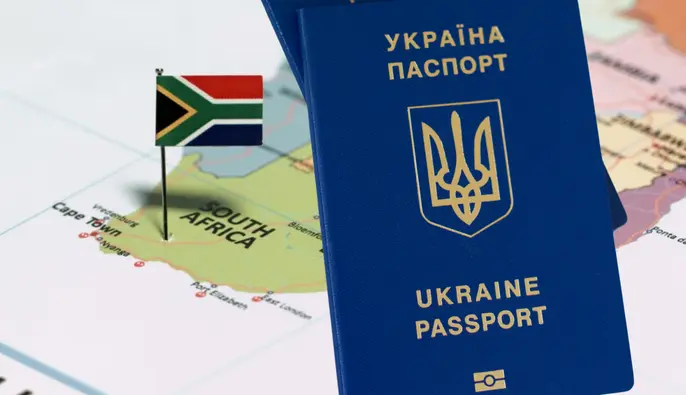
That is why victories such as the one achieved recently between Ukraine and South Africa matter so much: Africa’s largest country has introduced simple and accessible electronic visas for Ukrainians. To understand the significance, until now a Ukrainian citizen seeking a South African visa had to wait around two months and make two trips to the nearest South African consular office in Warsaw. Only the most persistent — or desperate — would complete the process from beginning to end.
As a result, many promising beginnings of dialogue were lost at the paperwork stage. And this was happening with a country that is one of the leading powers in Africa and in the Global South more broadly.
This situation affected everything: contacts between civil societies, the development of bilateral business ties, political dialogue, and interaction between ordinary citizens. The two countries lacked not only a habit of regular face-to-face communication, but even a real opportunity to communicate in this way. Geographic distance, geopolitical “peculiarities,” and a restrictive visa regime formed a deep moat separating us. That moat has now become shallower. At last, there is a chance that our two countries will begin communicating on a regular basis rather than only occasionally.
So, what exactly happened? At the beginning of the year, South African President Cyril Ramaphosa, in his annual State of the Nation Address, declared the liberalisation of the visa regime with other countries — a kind of opening of South Africa to the rest of the world — one of the priorities for 2026. South Africa’s Department of Home Affairs launched a website through which foreigners could apply for an electronic ETA, or Electronic Travel Authorization.
Initially, the system was launched on a pilot basis for four countries, at least two of which are among South Africa’s priority partners: China, India, Indonesia and Mexico. In September, another 29 countries joined the system, including Ukraine. The fact that Ukraine came immediately after China and India is a positive signal for our bilateral relations.
In practice, the new system is indeed convenient and modern. In most cases, applying for a visa takes only a few minutes on a smartphone, after which the electronic visa is delivered to the same device. It can simply be added to the phone’s digital wallet and used within 180 days, with a total permitted stay in South Africa of up to 90 days. The fee is around 1,000 South African rand, or roughly €50. According to early users, the process is quick and straightforward. On average, receiving the visa takes about 30–40 minutes.
At the same time, the ETA system is still being refined and tested. It will continue to be expanded and improved. Its main shortcoming at present is that citizens under the age of 18 cannot yet obtain such a visa. However, we are assured that their inclusion in the system is only a matter of time. There are also plans to use the ETA system to issue work visas for professionals in occupations that South Africa considers to be in short supply.
There is another issue as well: SMS messages from South Africa do not reach every Ukrainian mobile number. So, for the time being, the practical advice is that, where possible, applicants should link their ETA account to a phone number from another country. We are working on this issue too.
It is also important to understand that, as in Ukraine, the final decision on whether a person may cross the border is always made by a border officer — the person sitting in the booth marked “passport control.” Travellers should be prepared for that conversation. In other words, they should be ready to explain the purpose of their trip, provide details of where they will stay in South Africa, and show their return tickets. The full list of requirements is available on the official website.
For now, the visa is available to various categories of travellers: tourists, investors, businesspeople looking for partners, participants in international events and others. According to South Africa’s Department of Home Affairs, it is one of the most modern and open visa systems in the world. The first experiences of Ukrainian travellers appear to support that assessment.
Ukraine’s inclusion in the ETA system is one of the most important developments in all 35 years of diplomatic relations between our two countries. The “summit,” however, is still far away. Not because Ukraine has been doing something wrong all these years, but because, for a number of reasons, the cost of achieving almost anything here is much higher than it is in partner countries. But those “various reasons” deserve a separate column of their own.